
Mason & Dixon - Part 2 - Chapter 62: Overtaking History
Analysis of Mason & Dixon, Part 2 - Chapter 62: The Anti-City, Bodily Possession, Stig the Spy, Braddock's Road, the Proclamation Line, the Real Back Inhabitants

The last time we had an accurate timestamp of events was when Dixon was heading North to New York (2.57) and Mason to Williamsburg (2.58), which was said to be in ‘early 1766’ (most likely January). Now, we get our first timestamp since: “In the Conoloways, on the Twenty-second of April [1766]” (608). The Conoloways were a disputed territory between Pennsylvania and Maryland, being right on the border, and were also known as Tonoloway. This was a settlement that existed near modern-day Hancock, Maryland somewhere between 15-40 miles (~24-64 kilometers) west of the North Mountain area (distance depending where in North Mountain you began) which was where we saw them picking up Tom Hynes, Catherine Wheat, and Captain Shelby.
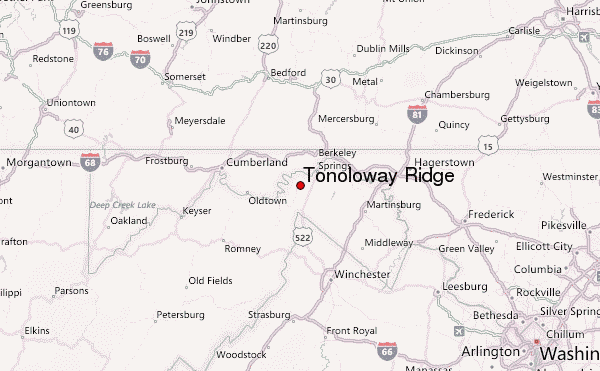
Here in the Conoloways, four inches of snow have fallen, and the survey party has begun snowball fighting. Throughout this fighting, Dixon begins recounting his dream of a city out in the west which acts as the ‘Anti-City’ to Philadelphia.1 Mason explains that these coastal cities have learned to push certain forces inward, leaving them to the so-called ‘Back Inhabitants’ to deal with. These Back Inhabitants were discussed earlier when Mason and Dixon were searching out crossroads to taverns (2.50). They were the citizens living in the recesses of the country’s interior, and the cities or towns which they lived within did not get help from the capitals or the major ports. In fact, they were likely entirely forgotten. There’s no way that the Conoloways were being actively supported by Philadelphia even if that were the capital of their state. Any help they may be getting would be due to their own hard work or by any nearby cities, even those across the Maryland border. The prosperous metropolises of Philadelphia and the California coast will, however, push all the ‘Forces’ toward the center of America where the less provided-for Back Inhabitants would have to suffer for the doings of the Elite. This can be taken literally since Philadelphia did push the Native Americans inward leading to many events we have discussed like the Enoch Brown School Massacre. Or it can be taken metaphorically, representing instead accumulation of wealth in certain locations (or among certain group of people) while depriving those who have been shuffled off into the recesses of the world.
So, then what is the City of Philadelphia compared the Anti-City of whatever West Coast Metropolis that Dixon is dreaming of? Mason claims that it is “some concentration of Fate,— some final condition of Abandonment,— wherein all are unredeemably alone and at Hazard as deep as their souls may bear,— lost Creatures that make the very Seneca seem Christian and merciful” (609). Where Philadelphia is a place that connects the entirety of its society together, and the centers are where Back Inhabitants find loose connections where they can, the Anti-City is where individuality has evolved to its more egregious form, leaving every citizen Abandoned and Lost, wandering around without any connection either planned and perennial or haphazard and infrequent (like the east and the interior respectively). And this is not the attempt to categorize the east as a perfectly functioning communal society and the west as a selfish, individualist state. Instead, it can be viewed as a timeline for American evolution moving from its original ‘state’ to the ‘anti-state’ that it now exists as which objectively subsists on near pure individualism. As the line moved westward — as time moved on — the state slowly morphed into the anti-state that we see it as today. Though, often enough, America exists in those interstitial spaces where the Back Inhabitants live.
Dixon then reveals to Mason that Mason has been talking in his sleep in a different language, hypothesizing that “some wand’ring Soul who may have been centuries without sleep, who may’ve indeed forgotten what sleep feels like,” (609) had taken refuge in Mason’s unconscious body. Mason, obviously, hates the thought of this possibility, yet does not wish for Cherrycoke or Zhang to observe him. But, nonetheless, Mason comes to understand what is happening. He says to Dixon:
None of this may be about either you or me. Our story may lie rather behind and ahead, and only with the Transits of Venus, never here in the Present, upon the Line, whose true Drama belongs to others,— Darby, Cope, Tom Hynes, Mr. Barnes, some new hire we don’t even see,— and when ’tis all done I shall only return to Sapperton, no wiser, and someday wake up and not know if any of this ‘happen’d,’ or if I merely dream’d it, even this very moment, Dixon, which I know is real....
(610)
Mason and Dixon are here for one purpose, and that purpose once fulfilled will leave them with no tethers to America. Whatever dead they leave behind — or whatever remnants they leave behind that will cause the number of the dead to grow — will never once be seen by them. They will leave and, at most, be haunted by the ghosts they sent to graves, or that they left graveless. They, one day, will die having no inkling of the Empire they had helped build.2 As more Transits of Venus pass by, it will become clearer, sure. However, all that they will see is the project that took place between the eight-year gap of the 1761 and 1769 Transit. They will not live nearly long enough to see the full repercussions of the American Empire arise at the next set of Transits in the late 19th-century, let alone the early 21st. But as they move further west and as the Allegheny ghosts and spirits multiply in number, these ‘hauntings’ will occur within their subconscious mind to a greater and greater degree even if they are unwilling to admit what they may mean.
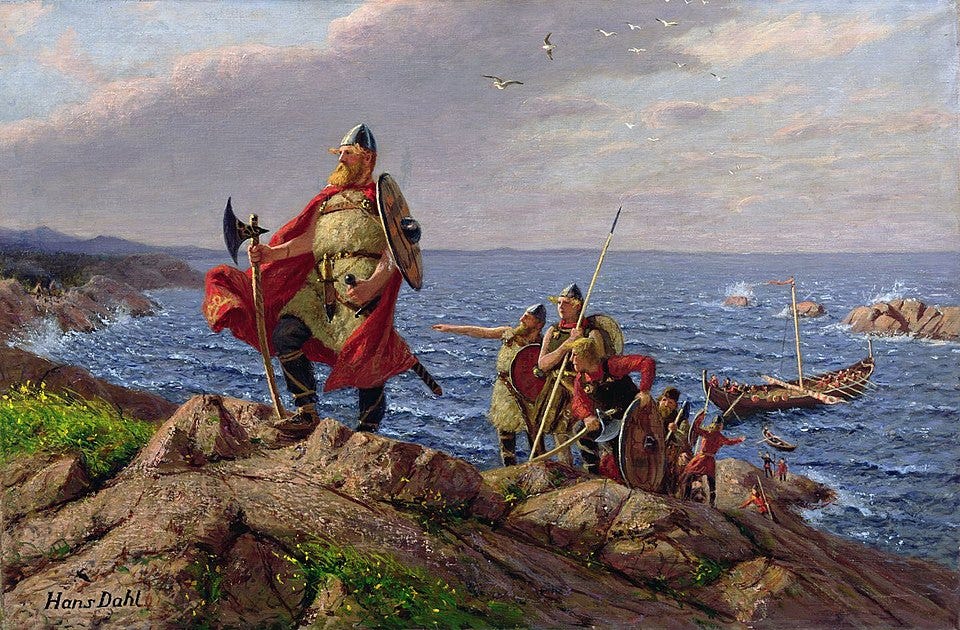
Then comes the ‘Drama of Stig.’ While Stig3 is working upon sharpening his ax, a survey party member named Light-Fingers McFee begins going through Stig’s stuff, eventually finding a “Sheet of Parchment cover’d with elaborate Seals and antiquated writing in some other Language, possibly Swedish” (610). After a chase, Stig reveals that it is actually in Latin but that the orders do come from Sweden. Stig, apparently, is a spy for that nation — the Lords of Sweden believing that the true inheritors of this continent should be Sweden given the Vikings (led by Leif Erikson)4 discovered Greenland and America nearly 500 years before the rest of Europe (c. 1000 CE). And not only that, but New Sweden existed in the Pennsylvania area before other European colonies around 1638-1655.5 Stig claims that not only does this land therefore belong to the Swedish because of the Vikings’ initial discovery, but because the Swedish settlements treated the Native Americans far more gracefully than the other European colonizers. This is surprisingly accurate, for the Swedish do not have any recorded violent conflicts with the Native Americans and actually purchased any of the land that they colonized directly from the tribes. Whether or not you believe that this is an excuse for the act of colonization itself is irrelevant, because it is objectively a massive stretch better than how the Native Americans were treated by any other colonizing force. If this colonization were inevitable, then this would likely be the best way for it to occur. But, alas, the inherent evil of the Royal Society and the East India Companies could not allow something that even bore an ounce of goodness to take precedence over their desired goal.
After Captain Shelby silences the argument that ensues by threatening them with the invocation of the Riot Act, Stig continues his story of why he is here and why he believes Sweden has a right to America more than England. But before his speech, let us first look at this invocation of the Riot Act.
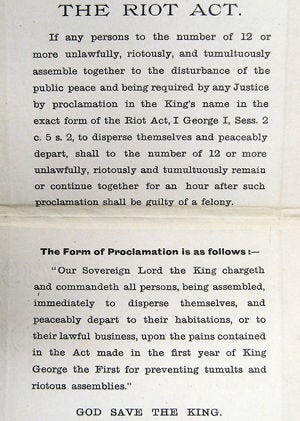
As Biebel defines it, “Parliament’s Riot Act (1714) allowed for authorities to declare any assembly of a dozen or more [people] a ‘riot’ and legally obligate them to disperse” (Biebel, 223). Two paths can be followed here. First, we are already seeing how the rulers of the nation were immediately trying to take away the ‘Freedom of Assembly’ before it was even granted via the Constitution (not that that would do anything to really give us the option if it was assembling against something that the Elite did not wish for us to assemble against — such as what Stig is claiming). The second path is a comparison to Pynchon’s coming novel, Inherent Vice. In that novel (which takes place in the early 1970s), while Doc Sportello and three other characters are driving in a car at night, the police pull them over not because they were breaking the law, but because, as the police state, “New program, […] you know how it is, another excuse for paperwork, they’re calling it Cultwatch, every gathering of three of more civilians is now defined as a potential cult” (Pynchon, Inherent Vice, pg. 179).6 Sounds pretty damn close to the Riot Act, doesn’t it? And likely, the inference was that this program was ostensibly begun due to the recency of the Manson Murders in 1969. However, like the ostensible purpose of the riot act, it was not because they were actually concerned about a cult, but because murders themselves gave more precedence and justification for police surveillance and control. Thus, the foundation of this idea was literally implemented 250 years before. It is indicative of America.
Onto Stig’s speech.
Stig first takes us back to the Vinland7 Saga of Leif Erikson, comparing it to Greek or Roman mythology but from the perspective of Scandinavia. To the Swedish, finally approaching “the Capes of Delaware, was thus, for [them], to pass the Pillars of Hercules” (612). He considers it a Philadelphia Irredempta — an unredeemed piece of land that was promised by the very foundational myths of the land he was from. This form of justification has been used many times before such as the Holy Roman Empire claiming dominance via the myths that the Ancient Roman Empire set forth, or that modern day Israel used to claim Palestinian land as their own, or that the Christian Empire has used for... well, basically every atrocity brought about by Christian Empires for the last thousand plus years. Now, again, at least as far as we know, Stig was not of this same evil sort — and apparently neither was New Sweden as a whole — but we are seeing how that type of justification can be rooted in a people’s mind from the beginning of time, allowing it to sit there dormantly until it need be taken out for some other motive. Not everyone goes around believing the myths of the People will become relevant. But when land must be taken or a side must be chosen, it gives the spiritual precedence to do so.
Shelby begins to think that Stig was not, in fact, Swedish at all. And he was right. Stig claims that the Swedes to him and his people were as dark as the Africans were to the English and Americans. Whatever this may mean and whoever he may work for, he is still nonetheless here to claim American territory for whoever will hire him. In this instance, it is Sweden, but later he “shall have to be an A-gent for someone else” (613). Given the degree of Whiteness and North-ness he has described himself and his people as being, it would not be a stretch to say that they embody the very Empire of Death. Pynchon, in Gravity’s Rainbow, used both the direction North and the color White to represent death itself (not to mention that Stig’s scroll was written in Latin which has some of the same inherent connotations). Thus, Stig is an Agent of that Empire, selling himself to any governmental and imperialist body who needs a bit of espionage on their side.
But Stig, to this point in the story, has not appeared to be so evil, right? You’d be right to say that he has not. But evil does hide in the most inconspicuous places. If the story were told from the perspective of someone like Benjamin Franklin, wouldn’t Mason and Dixon themselves have seemed entirely innocent and naïve in regard to what they were being used for? For, we would not have seen each moment of their own realized complicity. We would not have heard their conversations revolving around those discoveries. Instead, we would have seen two men mapping the stars, doing their very job, just as Stig chops down the trees, doing as he was trained to do. Are they all, therefore, agents selling their labor to the Empire of Death?
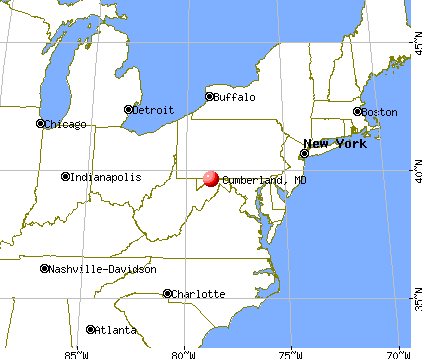
Some time passes and we next see the party having just passed “The last Market Roads […] the three between Antietam and Conococheague, the Fort Bedford Road, and finally, Braddock’s Road” (614). This final road would place them now about thirty miles (48 kilometers) west of where the chapter began (which was in the Hagerstown area), meaning they would now be just north of Cumberland, Maryland. Geographically, this places them around 160 miles (258 kilometers) west of the very beginning of the Mason-Dixon Line, about 37 miles (60 kilometers) before the end of Maryland, and about 93 miles (150 kilometers) before the very end of the line itself, meaning they’re just about two-thirds of the way there. (Though we will see that they don’t ever reach the true end of what we know today as the Mason-Dixon Line),
No surprise that out here, things are getting more chaotic than ever before: “They have enter’d that strewn and charr’d Theater of the late War, where Indians are still being shot by white men, and whites scalp’d by Indians, who yet pass upon their forbidden Trails, and watch invisibly from the Forests” (614). Even in the growing unsurety of the American West previous to this, such things had only existed in History (however recent that ‘history’ may have been), such as the Enoch Brown School Massacre or the attack at Fort Loudon. On top of this, now that the party has reached Braddock’s Road, they meet “veterans of Braddock’s Defeat” (614) — yet another one of those recent pieces of history discussed along with many of these other events (2.52).8 What we are seeing, thus, is Mason and Dixon becoming eyewitnesses to the very history that they had only heard tales about. America, in its expansion, is attempting to erase the very concept of its own history. These violent incidents that involved Native Americans had been ‘of the past’ — events that had been pushed to only occur further and further west so the white metropolitan men could be safe. Part of the reason for American expansion is thus to prevent the new settlers from experiencing such atrocities as described above, allowing the Backland Inhabitants to deal with it while the Natives are slaughtered.
Another five or so miles (8 kilometers), just north of modern-day Frostburg, Maryland, brings them “two miles short of the Summit of Savage Mountain […] and legally the Limit of their Commission. They set a Post at 165 Miles, 54 Chains, 88 Links from the Post Mark’d West” (614). This is now, quite literally, the Proclamation Line. They can legally go no further. So, for now, they turn back east, widening the Visto of cut down trees for... whatever reason they may have to do so. Mason, in his journal, records looking back upon this line of trees which stretched so far that he could see the very curve of the Earth within it. Imagine how long this line of death has spread if you could see such a curve.9 And Mason tells Zhang that he believes there are far too many trees in this forest, not in the sense that he hates the trees themselves, but that he is only viewing the trees as impediments to his work, separating his place as a living creature on this Earth from all else upon the Earth. For someone seeking some sort of spiritual epiphany, he is about as far as one could get from one with this belief. This belief will only evolve and infect the minds of many westerners over time, seeing nature as an obstacle in the way of progress.
Zhang reinforces the idea that the trees are a part of this world as much as Mason is, reminding him of the tree not only as a part of nature, but as a pathway to Enlightenment: “Adam and Eve ate fruit from a Tree, and were enlighten’d. The Buddha sat beneath a Tree, and he was enlighten’d. Newton, also sitting beneath a Tree, was hit by a falling Apple,— and he was enlighten’d. A quick overview would suggest that Trees produce Enlightenment. Trees are not the Problem. The Forest is not an Agent of Darkness. But it may be your Visto is” (615). Zhang sees this line as the very root of American Evil, and he is right. No, not the Mason-Dixon Line itself or even the mere concept of mapped borders. But the inherent properties and metaphors that we have seen the line possess in every chapter up to this point: the destruction of nature, hegemonic control, the rise of capitalism, the electrification of the west, the slaughter and exile of Native Americans, everything that had to do with Back Inhabitants and Anti-Cities, the loss of Oneness with the world, the erasure of history and the rise of false historiographers, the idea that history could become a singular path forward rather than a tangled web, poisoning the waters with progress, and, of course, the entirely legal act of slavery.
Yet, Mason essentially states that ‘of course this line exists! It is natural! The very properties, beliefs, and actions upon either side are inherently different!’ giving ‘Negro Slavery’ as an example, this slavery being heavily utilized in Maryland and not as much in Pennsylvania. Now, first of all, this is entirely wrong. As Dixon refused to see in his venture down to Virginia (2.39) and as Mason only got a taste of when he too travelled down there (2.58), sure, slavery was far more present south of the line than north. But directness and blatancy regarding this practice in one place does not erase its existence from somewhere that better hides its evil. Zhang furthers this notion, pushing us forward in history, stating, “If you think you see no Slaves in Pennsylvania, […] why, look again. They are not all African, nor do some of them even yet know,— may never know,— that they are Slaves” (615). Obviously and most notably, this reminds us of the coming Civil War — the Union and the Confederacy — where slavery on one side was quite literally illegal while it was fully legal on the other. And yet, was this true? In the north, all men (and to a much greater extent, all non-white, non-male, non-landowning, non-Christian, non-wealthy men) had a chance to be enslaved in some way as long as it was not outright forced labor. What it could be, however, was slavery in its many other forms, be they via incarceration, reparation, wage-based, indentured, and so on. And among these other forms of ‘slavery,’ any excuse could be made to essentially make forced labor appear as if it were under the auspice of these other forms when in reality, there really was no other choice but to work for your masters.
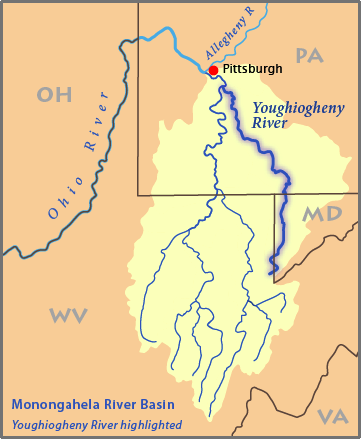
We are then told that “On June 14th, they stand atop the Allegheny10 Divide. From now on, any Settlers they find are here in violation of Penn’s and Bouquet’s Edicts. Here the Party will cross, not alone into Ohio, but into Outlawry as well” (616). Mason is aware that they are approaching the previously discussed legal boundary, also writing that if they were to continue, they would first have to pass the ‘Yochio Geni’ River (his phonetic spelling of the Youghiogheny). Recalling the many issues and mystical revelations of their past river crossing at the Susquehanna, one could only imagine what may occur this far out west, across the Alleghenies even, when crossing another.
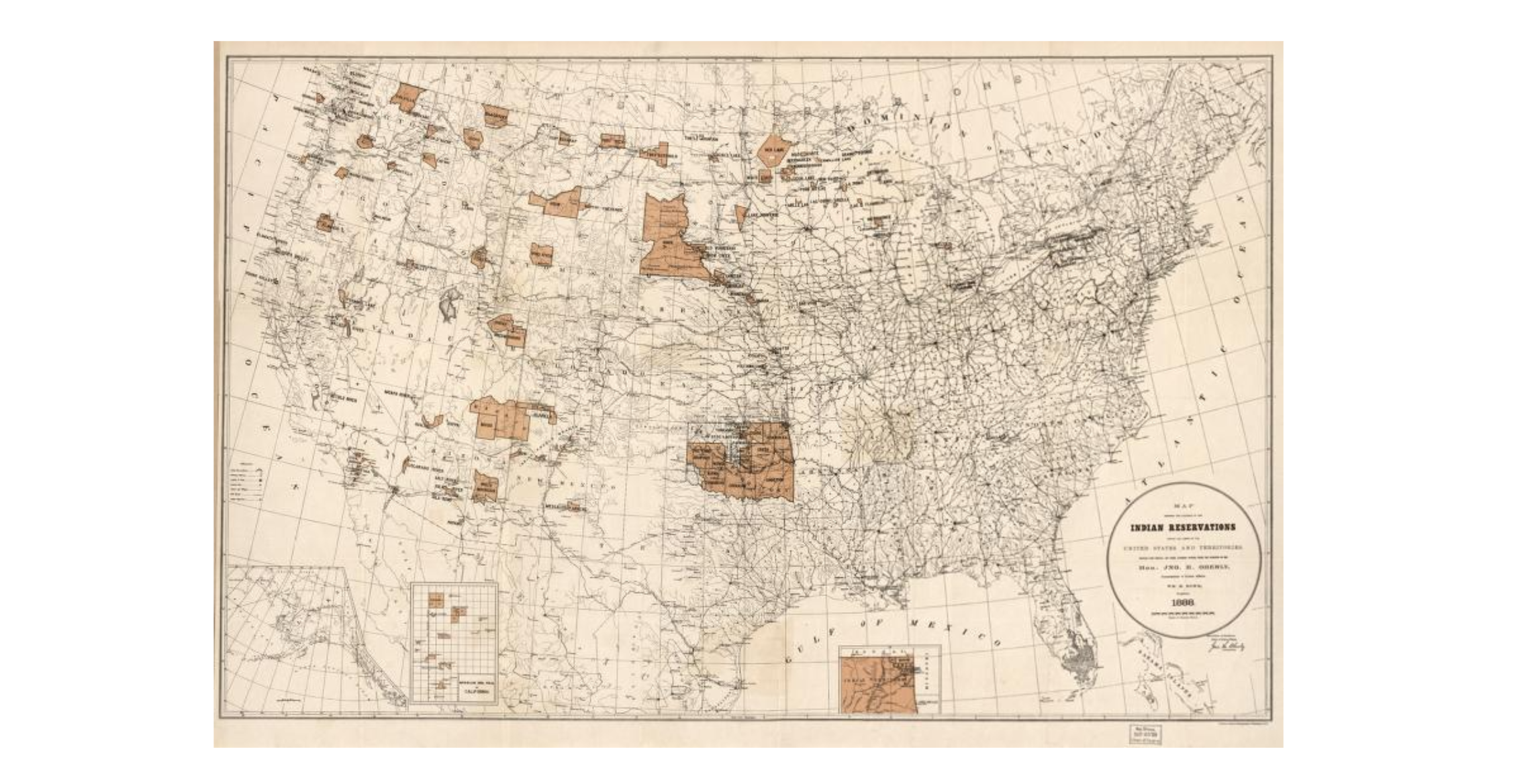
The final section of this chapter has the survey party coming upon racoon hatted Americans — the epitome of Back Inhabitants. The survey party is terrified given the men out here no longer have any tethers to the English or the Royal Society — even the Philadelphians for that matter. They are the most rural of folk and yet are easily convinced to join the party to fell more trees. If anything could speak to someone who would otherwise despise you, the promise of money and comfort is the easiest path to achieve this even if it is only a promise that will be fulfilled in the short time you are needed. This is exactly how many of the Elite conservative representatives con their constituents into believing that they are fighting for them — promising that their troubles will go away if they just follow their path forward. (And the same can be said, of course, for Elite liberal representatives).
Finally, we see that these Back Inhabitants know about General Bouquet and his Proclamation Line. This brings up the comparison of all the various cartographic projects going on at once. The Proclamation Line, the Mason-Dixon Line, George Washington’s previously discussed Dismal Swamp Project (2.28), Washington’s other western land speculations, Bouquet’s other plans for America where he desired “to tessellate across the Plains a system of identical units, each containing five Squares in the shape of a Greek Cross […]” are all occurring in tandem; as Captain Shelby says, “Dozens of such Schemes each year” (617). Therefore, it is not the fact that the Mason-Dixon Line in and of itself is this so-called ‘Agent of Darkness’ that Zhang described, it is that all of these projects at once were being mashed together with the knowledge that if one did not work, the others could pick up the slack: “Bringing closer the day […] when one of them succeeds” (617).
If it were just the Mason-Dixon Line with all of its inherent meanings, there may have been the chance that America could have been something different, or that the project would have failed. The City in the East could have led to the Anti-City in the West, and yet maybe the extremes could have been moderated, or the interior could have been better connected. The ghosts that possessed us could have either been placated or allowed to live in their supernatural oases without worrying about the death of all they had ever known, meaning they would not have to possess a living body to get a semblance of the sleep they once knew. And yet, this is one novel about one group of people carrying out one specific plan. Here, we realize the entire breadth of what is going on with this Empire of Death. Stig is merely one agent, but aren’t they all? Is not every parcel of land being corrupted by some perverted interpretation of the cross?
Up Next: Part 2, Chapter 63
Given the mention of ports and it being opposite Philadelphia, it seems likely that Dixon is picturing San Francisco or Los Angeles — thematically I would imagine it as the latter. But specifics are not terribly important.
Though, they will get a glimpse of it in Part 3, no matter how hard they try to ignore it.
Stig was the Swedish axman who was the leader of the other axmen.
William T. Vollmann’s novel, The Ice-Shirt, covers this history and mythology very thoroughly (though admittedly, the book, in my opinion, is not that great a work of literature — many disagree with me there though, so take my opinion with a grain of salt).
Information about New Sweden thanks to Brett Biebel:
Biebel, Brett. A Mason & Dixon Companion. The University of Georgia Press, 2024.
Pynchon, Thomas. Inherent Vice. Penguin Books, 2009.
Reminiscent Thomas Pynchon’s previous novel, Vineland, for reasons we will get into when the analysis for that book comes.
While Braddock’s Defeat was not discussed in depth within the novel, we discussed what occurred historically and why it was referenced in the essay on 2.52. Go back there if you need a refresher: Mason & Dixon, 2.52.
Biebel catalogs that this part of Savage Mountain was reached on June 9, 1766 (which was about a month and a half from the beginning of this chapter), and that Mason’s journal entry was from July 7, 1766 (Biebel, 224). However, after this coming section of this chapter with Zhang, we will be moving back to June (the 14th specifically). So, Mason’s journal entry is a little jump forward in time.
Remember that the Allegheny Mountains are the portion of the Appalachians which they are crossing here. The Appalachians themselves stretch much further south in America.