
Mason & Dixon - Part 2 - Chapter 67: Mediatized Mythologies
Analysis of Mason & Dixon, Part 2 - Chapter 67: Mohawks and Crawfford, Zhang's Critique, Cherrycoke's Vision, Rapture, Conversation with the Mohawk, Giant Vegetables, Jack and the Beanstalk, Beets

Fewer than two weeks after staying with Cresap in Cumberland, Maryland — putting them now around late July 1767 — the survey party is “join’d by a Delegation of Indians, sent by Sir William Johnson,1 most of them Mohawk fighters, who will remain with the Party till the end of October,” (646) where the Mohawks will state that the Great Warrior Path is as far as they are allowed to accompany them, inferring (threatening even) that this is as far as the survey party should go as well. The Great Warrior path is a Native American trail which even the Mohawks were not allowed to cross and which Natives upon the western side could not cross either. It allowed for safe travel and for a meeting point between tribes, almost acting as their own Proclamation Line. This trail is something that the Natives Americans on both sides treated as sacred, almost as if it were its very own natural river, again reinforcing the concept of natural borders existing in the pre-colonial world (lines which actually made sense to draw). They are thus warned that drawing this unnatural, straight line through the path would essentially be severing nature in half, or putting a dam across the flowing waters of a river, leaving it to dry up and die.2
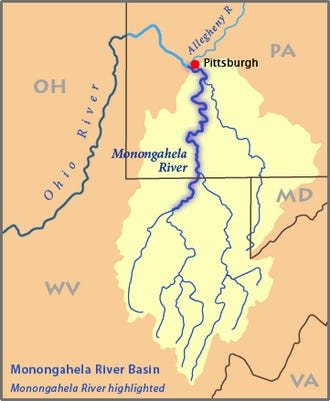
The translator who is with Mason and Dixon, Hugh Crawfford,3 warns them that this is the line not to cross. We have heard this warning before: seeing the danger and difference when crossing the Susquehanna, the same when reaching the foothills of the Alleghenies, when surpassing the Conococheague, and then when reaching the Proclamation Line itself. Every single time they crossed one of these natural borders further west, reality began to blur, historical incidents (which would one day be forgotten) began to increase, and forms of magic which would one day represent the future America4 began to emerge. In this case, as they are warned, “Distance is not the same here, nor is Time” (647).
Later, Mason talks to Reverend Cherrycoke, saying that he (Mason) respects the Mohawks “and their unhappy history. But they put [him] in a State of Anxiety unnatural” (647). He is, like many a modern American, admitting he/they have sympathy for an oppressed and tyrannized group while believing that this supposed sympathy is enough to negate the fact that the discomfort that comes from the differences between the oppressor-group and the oppressed-group is enough to justify doing quite literally nothing about said oppression. In other words, he feels bad for them, but because they have their untenable differences, he should not be subjected to doing anything with or for them. Dixon, on the other hand, according to Mason, is “Young Jollification,” (648) someone who is happy with anyone and anything as long as he gets his treats. But is this really true? For, as we saw long ago when Dixon went out to see the Paxton Boys massacre site (2.31), he went in Mason’s clothing. So, while Dixon had one reaction and Mason another, they are in reality two sides of the same coin. They may very well express themselves differently, but they experience the same totality. Mason, for one, also loves that ability to indulge but does not let it affect his outward expression; Dixon, on the other hand, feigns his acceptance of these other groups, but just like Mason, is not willing to do anything about their subjection to the system. And the Native Americans here know this, having “observ’d Meridian Lines as Boundaries to separate them one from another” (648). They know that Mason and Dixon are not forming boundaries using “Rivers, nor Crest-Lines,” (649) but are instead using the lines for their own nefarious purposes.
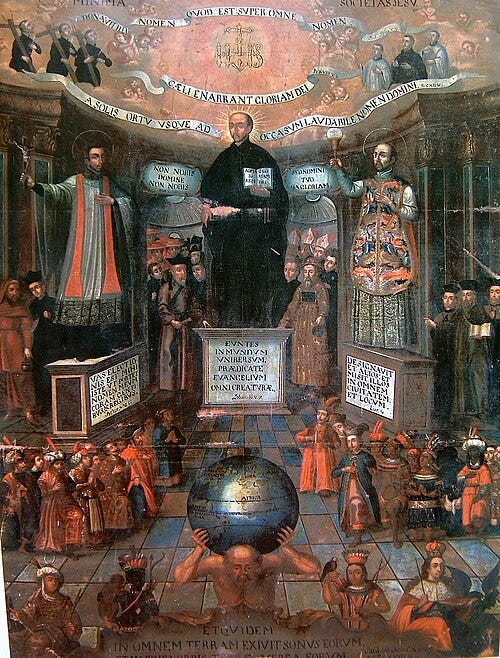
And who is it that are requiring the drawing of these lines? It is, as Zhang says, “The same […] whose Interests we have continu’d to run across Evidence of,...who for the Term of their Absence are represented by Jesuits, Encyclopedists, and the Royal Society, who see to these particular Routings of Sha upon the Surface of the Planet by way of segments of Great or Lesser Circles” (649). These men are the true Elites, whose interests are brought to fruition via intelligence agencies (i.e. Jesuits), historiographers (i.e. Encyclopedists), and imperialists (i.e. the Royal Society). These entities work together under the guise of bettering the world for science or mankind’s freedom, but in reality, are working for the Elite and the Elite alone, ensuring that their bank accounts stay filled, their land remains worked, and their pleasures sated. Given Mason and Dixon are working for one of these entities, the Royal Society, Mason asks if Zhang is implying that they should simply stop what they are doing — cease their drawing of the line.
Mason and Dixon then accuse Zhang with the idiom, “He who would hang his Dog, first gives out that he is mad” (649) — a common English idiom that means “someone who wants to do something controversial might try to provide justification in advance” (Biebel, 231).5 They are essentially accusing Zhang of pretending that he is insane — with his pretending to be Zarpazo in disguise — so that he could convince them of the faults of the line without being reprimanded or removed from the party.
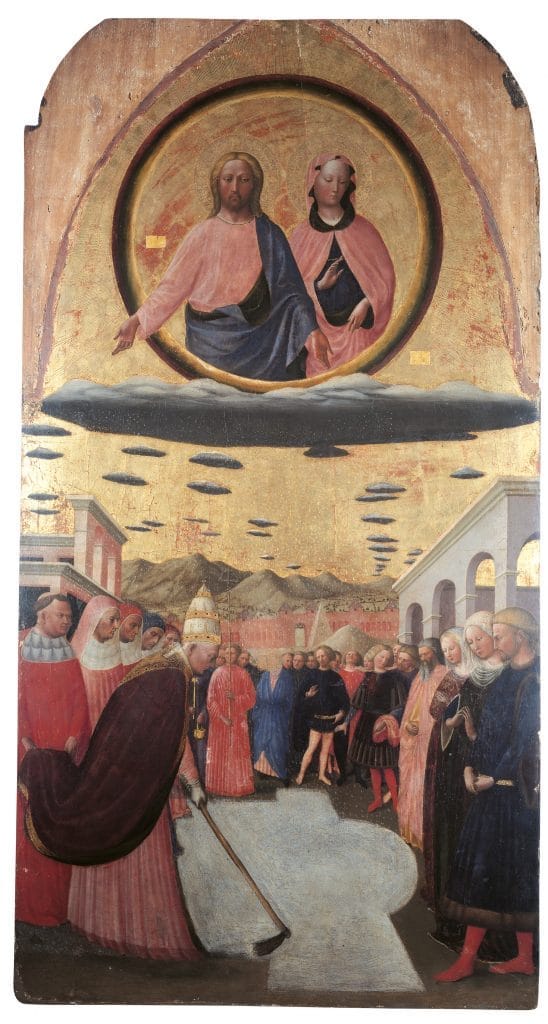
Moving on to Reverend Cherrycoke’s perspective, we learn that, in a dream, he himself rises to a bird’s-eye-view above the line, traveling west, seeing all the line represent itself as a fiery line of glowing coal and the very flames of Hell. As always, the coming west is a hell built on this coal, their coal tars, and rising smoke. The flames of Hell will only then lead to further progress where fires will be sealed in some vessel that will glow blue in the night sky, and that is “but a form of Transport” (650). It is the same form of metaphorical magic that the magnetic soil represented just past the Susquehanna River (2.49), but this time foretelling the coming of both the airplane and the UFO — hence, “They [the Natives] have seen it before, and they have never seen it before” (650). What they have seen is the airplane — the jet — and the very means by which land will be surveyed, scouted, taken, and destroyed in the future. A plan that will lead to the ability to do what Mason, Dixon, and their employers are doing at more accelerated rates. What they have not seen is the UFO, the glowing blue in the night sky which many a white man will say assisted these Natives in building their Pyramids and their Mounds.
His vision turns into that of the Great Warrior Path, which he sees as a running river revealing itself to him extrasensorially. And he wonders, having heard Zhang’s critique and this vision of a future Hell, if this final stretch should remain unmeasured: “may it remain, a-shimmer, among the few final Pages of its Life as Fiction” (650); he understands what it will bring, and hopes that the final pages of this line’s history (and of this novel) will remain unfinished, unmapped, or, at least, as Fiction.
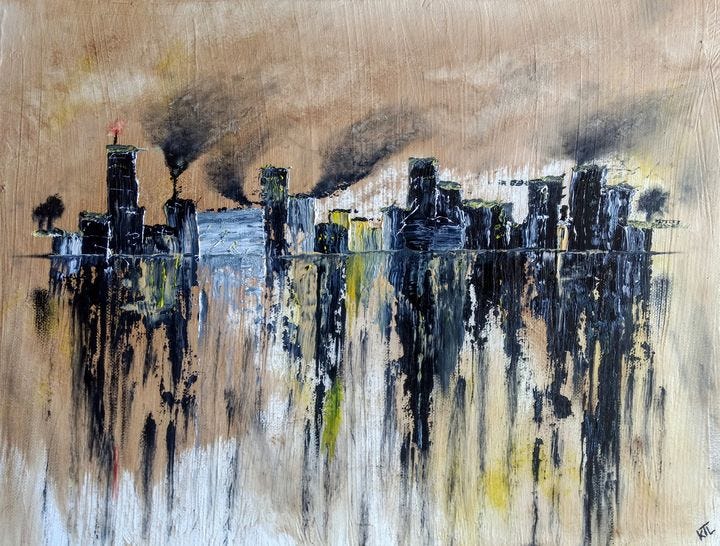
Another vision comes — a vision of the West. One might ask, what’s the difference between crossing the Atlantic and the War Path? between the Susquehanna and the War Path? between the Proclamation Line and the War Path? between any pairing of any of these ‘lines?’ Inherently, insularly, there is no real difference. Crossing one is the same as crossing another. However, after every iteration of another crossing, a cycle begins again. There is a new “Encounter of Ancient Savagery with Modern Science” (650) which sends up a tavern, and then another, and then business upon business until their smokestacks begin to turn these forests and rivers “black as city soot” (651). Philadelphia has already experienced such ‘Rapture.’ Has already seen its original, natural land borne upward to heaven, only for those glowing coals of hell to replace it, pumping the smoke of industry into its surrounding skies. And as we saw slightly further out west, the lands may not be so inundated with industry and urbanization, but they still bears the mark of America, bearing landmarks such as Lepton’s Estate and the Iron Plantations (2.41 & 2.42). Even further, the taverns still exist, until as Mason and Dixon find out, even those become scarcer (2.50). Now, here, all we see is a mostly innocuous city like Cumberland (2.66), and around the Warrior Path, no sign of America is yet to be seen at all. But America is coming, and that is the difference. It could have been stopped at Philadelphia, the Proclamation Line, or any point between. But America necessitates this endless progress, and when it finally reaches the Pacific, it will still not be enough to satiate America’s bloodlust. America must bring the very Rapture upon the Earth as a whole.
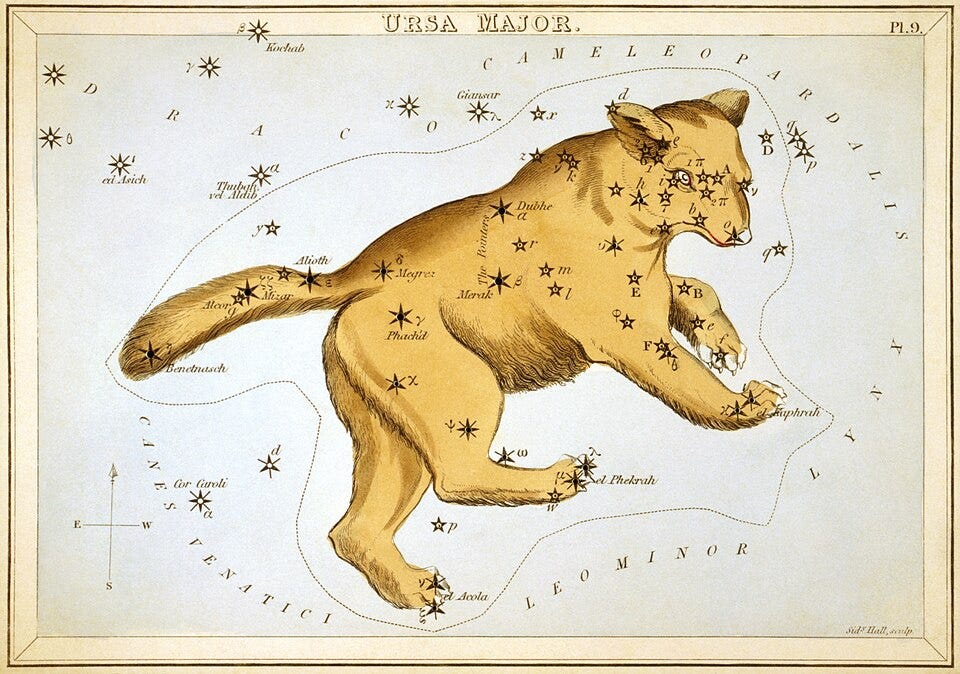
Sometime later, Mason asks the Mohawks where their God lies, and they point out West, where the Visto is bound to go. They ask him the same, and he points to the stars. Mason is thus, unconsciously, telling them that he is using his own God to overtake theirs — using, the stars to map the west, using the Christian world to overtake all that the Indigenous have ever known. In one of the most subtly heartbreaking passages in the novel, this leads to a discussion between the surveyors and the Natives about fishing and ‘Sky-fishing.’ These two populations, without the evil that those who ruled the colonizers brought about, could have brought many more conversations like this. Many more conversations comparing their concepts of fishing, of gods, of the Great Bear and of the Bears that the Native youths sought in order to become a man, of the similarity of their souls,6 of jokes between the two groups about the differences of one land versus the other, of bear tails and hunters, of anything but what actually was brought about.
This discussion brings Mason to a flashback, recalling him and his parents riding in a carriage, discussing the same constellation and the various names they had heard used for it, recalling the first time he remembers his father laughing, the happiness he felt sitting here with those he loved. It was, for him, another epiphany. For, why was that any different than this conversation here with the Mohawks? Does this comparison immediately destroy the validity of the European opinion of the Natives? It does, but why was that even in question in the first place? And it seems like, despite this destruction, based on Lomax’s comment, the opinion was almost immediately reformed in the eyes of the settler.
What is an epiphany if it is not taken to its end? Well, one could ask this same thing about the dozen that Mason has already had. Yet here again, it remains unfulfilled. For, surrounded by these men who have been nothing but kind and peaceful to him, he asks, thinking only the white men will understand him, “Are we in danger?” to which Daniel, a Mohawk Chief responds, “Oh, sure and ask the Mohawk, […] if the Topick be Danger, he knows all,— and let’s not omit Violence, Terror, Weaponry, am I leaving anything out? […] Scalp but one White man, ev’ryone starts assuming things” (653). He is inferring two things. First, sure, Mason and Dixon are in danger. Every living thing is in danger. And the white man, at this point, more so than ever before because they have incited the rage of a population who they have committed violence and terror against with weapons beyond what have ever been seen in this land before.7 Secondly, they call up the irony. If anyone was in danger here, it was not the white man. And if the white man was in more danger than they had been at one time before, it was only because of their own doing. They would never have been under the threat of scalping if they had not done what they had done out here.
In this discussion, Mason asks Daniel about the forests of giant vegetables he has heard of out west, to which Daniel, rather than answering, directs him elsewhere — another Mohawk man named Nicholas. This man tells him of these legendary forests, where grows “Corn. Each Kernel’s more than a Man can lift. Big Turnip. Six-man crew to dig out but one. Big Squash. Big Enough for many families to cut their way into, and then live inside all the Winter. Very big, BIG,— Hemp-Plant” (654). This story and stories like these were what made the original mythos of the west. They provided tales of adventure, tales of grandeur and magic, literal mythologies that the indigenous could recite. And yet what happens to this mythos? The colonizer hears those stories and immediately, rather than maintaining the same level of awe and respect for them, decides that the path forward is to conquer them. Hence, the climbing of the Hemp-Plant — the marijuana plant. First of all, it is that literal act of conquering something that many have been said could not be conquered, just as America had been theorized unconquerable. Secondly, as we see those conquerors rise up in its branches, we similarly see acts of commerce arising, giving other would-be colonizers the pleasures that would placate them from rising as high as the ‘Enterprisers’ who have built their shops upon the branches, forming an entire political economy in this ‘new world.’ But some, such as the ‘Bands of Renegadoes’ do, want this for themselves, and thus attack the ‘Enterprisers’ who themselves band together to stop the overthrow. The Enterprisers may have once competed with one another, but they now have formed a class unto themselves to maintain their entire existence. It is the whole of American history told upon the branches of a Hemp-Plant.
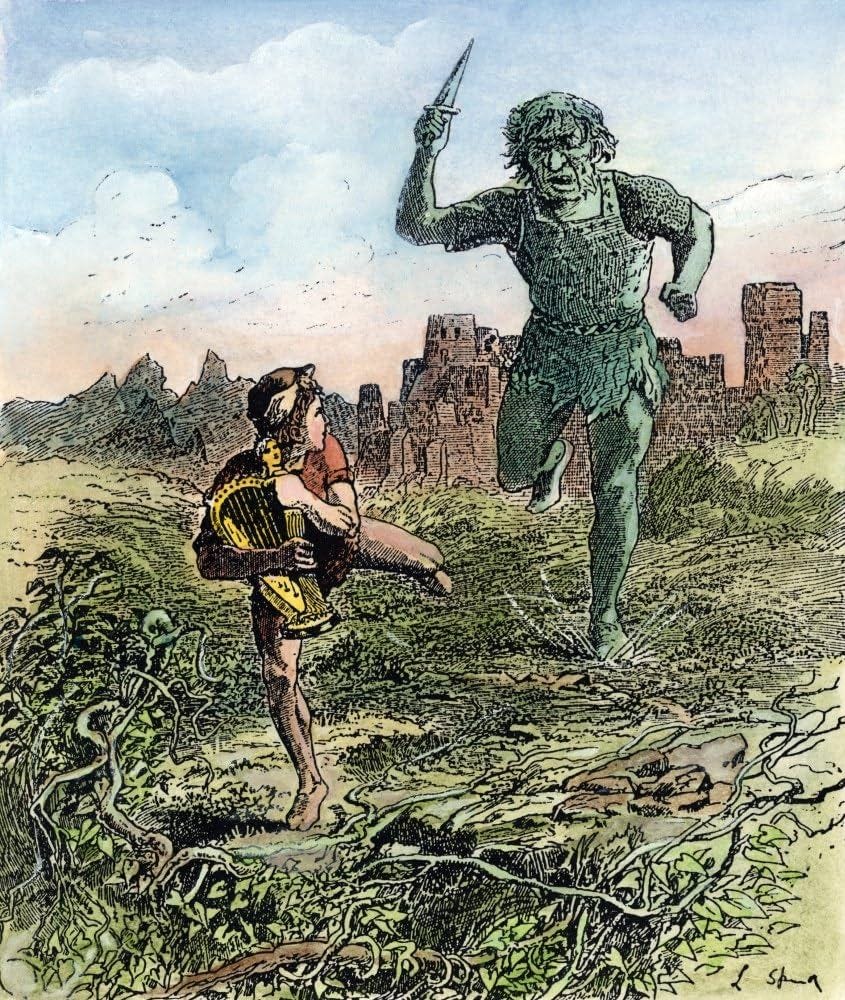
Heading further west, Mason and Dixon come across this land of giant vegetables. It is possible that this visit is a vision and not reality, but the point remains the same: the surveyors are realizing that the uncolonized land of America is the same one told of in the mythos they have heard — realms of the spirits they have been at odds with the entirety of their lives. The vegetables are, in fact, massive, and the mythos even blends with mythos of English ‘origin’ such that that of Jack and the Beanstalk when Mason asks, “Did ye hear someone going Fee Fie Fo Fum?” (656). This story itself has origins possibly pre-dating Ancient Greek mythology and has been told in variations all around the globe.8 Humanity, therefore, has origins that connect us in ways that predate our own concept of civilization, and yet, through the act of colonization, they will be taken from stories that are genuine works of wonder to those that are fairy tales which all will know are just mere stories that never really occurred. Even worse, one of the surveyors asks about this land: “Why keep it a Secret? Why not rather notify the Pennsylvania Gazette?” (656) — essentially asking, ‘why not take this foundational mythos and churn it into a story to be digested and shit out by the masses via journalism?!’ And not only this, but then, if this was done, the story would likely be claimed to have post-colonial American origins just as England now claims the Jack and the Beanstalk story when the story had origins far predating the existence of England as a nation-state. All of this plus the fact that Jack and the Beanstalk is a story about a person entering a foreign land and taking what is not his, only to kill the native of that land for attempting to regain what was originally theirs...
Finally, Mason and Dixon’s guide through this land shows them a series of giant beets which once had always been larger than humans and that have now, in the east, been rendered smaller so that mankind could easily manipulate and use these vegetables for mankind’s own purposes. The guide asks them, “Now that the Tables are turn’d, do, do they harbor Grudges? Do they have a concept of Revenge, perhaps for insults we never intended?” (657). So, just as the giant from Jack and the Beanstalk attempted to reclaim what was his, are these vegetables which have been transformed due to human greed and colonization capable of seeking revenge? And in the same way, are the Native Americans justified in their own desire to seek revenge? Well, America will steal the Natives’ very own mythology for themselves and rework it into a series of folklores like that of Paul Bunyan, crafting American Mythology right alongside the formation of the nation itself, — for, a country cannot exist without a mythology, right? And yet, neither can a country accept the mythology of the Natives that are to be slaughtered. So, alongside the formation of this new so-called mythology, America will ensure that it recounts unjustified acts of Native aggression, giving the colonizers the justification to slaughter those who tried to fight back, just as Jack killed the Giant despite Jack being the original aggressor. America is a creator of stories that will ensure it is believed to always have been, that will ensure it is the victim rather than the criminal. Yet the truth of this continent is hidden away in back-lands, only to be discovered if one is willing and knows where to look.
Up Next: Part 2, Chapter 68
This was the man who was attempting to negotiate the legality to surpass the Proclamation Line while Mason and Dixon were back east over the winter of 1766-1767 (2.66).
There are many branches of the Great Warrior Path, but the one that is mentioned here is specifically the Catawba Trail. We are not nearly there yet, but this path crosses the Pennsylvania/West Virginia border about 70 miles (~113 kilometers) west of Cumberland, Maryland and about 30 miles (~48 kilometers) before the true end of the Mason-Dixon Line. It is just north of Morgantown, West Virginia, where Mount Morris lies, and just past where the Monongahela River crosses the Mason-Dixon Line, as Crawfford says on pg. 647.
In most sources, just spelled with one ‘f’ as Crawford. He was the actual translator who accompanied the historical Mason and Dixon on this portion of the line in 1767. I’m not sure why Pynchon uses a different spelling, though it may just be the source he used for his research.
The magnetic soil that occurred west of the Susquehanna (in 2.49) was one example of this metaphorical magic, representing future mass agriculture which necessitated machines in order to function.
Biebel, Brett. A Mason & Dixon Companion. The University of Georgia Press, 2024.
When the Native youth mentions his soul, Lomax, one of the LeSparks, of course cries out that this is an interpolation — an impossibility. Souls, to him, belong to Christians.
This itself parallels many future wars that America and the West will bring about.
Yirka, Bob. “Phylogenetic analyses suggests fairy tales are much older than thought.” Phys, 20 Jan. 2016. https://phys.org/news/2016-01-phylogenetic-analyses-fairy-tales-older.html