
Mason & Dixon - Part 2 - Chapter 66: The Invocation of Death
Analysis of Mason & Dixon, Part 2 - Chapter 66: The Greenlander Saga, Whispers in the Woods, the Proclamation Agreement, Peter and Armand, Thomas Cresap's Story, Snake, Unseen Peanuts

We have finally reached 1767 having last left Mason and Dixon at Harland’s farm in December of 1766. The entirety of 1766 was taken up by their independent journeys to New York (2.57) and Virginia (2.58) after returning east for the winter (2.52) and then making the entire journey back west until they finally reached the Proclamation Line on the western edge of the Alleghenies (2.63) and eventually heading back east to Pennsylvania (2.64 & 2.65). 1767 is not the year that they would leave America, but it would “be their last year upon the Line” (636).
To begin the new year, Stig — the supposed Norse spy who was really a spy for the powers of death — tells Mrs. Eggslap the tale of Thorfinn Karlsefni, an Icelandic settler often told of in the great Icelandic sagas (Karlsefni being one of the first who sought to colonize North America). These explorers found what they named, Vinland1 — an area around modern-day Newfoundland and Labrador, on the northeastern coast of Canada. When here, just as the European colonizers would do many centuries later, they traded with the Skrællings — another name for the Native Americans. However, while they often traded for more menial supplies or foods such as ‘pelts’ and ‘milk,’ the Natives truly wanted their weapons. Karlsefni, however, had “forbidden anyone to sell them” (633). Apparently, there was not the grand idea just yet that profit could be gained by selling weapons to both sides of warring factions; though, of course, the Icelanders were not yet in a literal war with the Skrællings as the Europeans would eventually be.
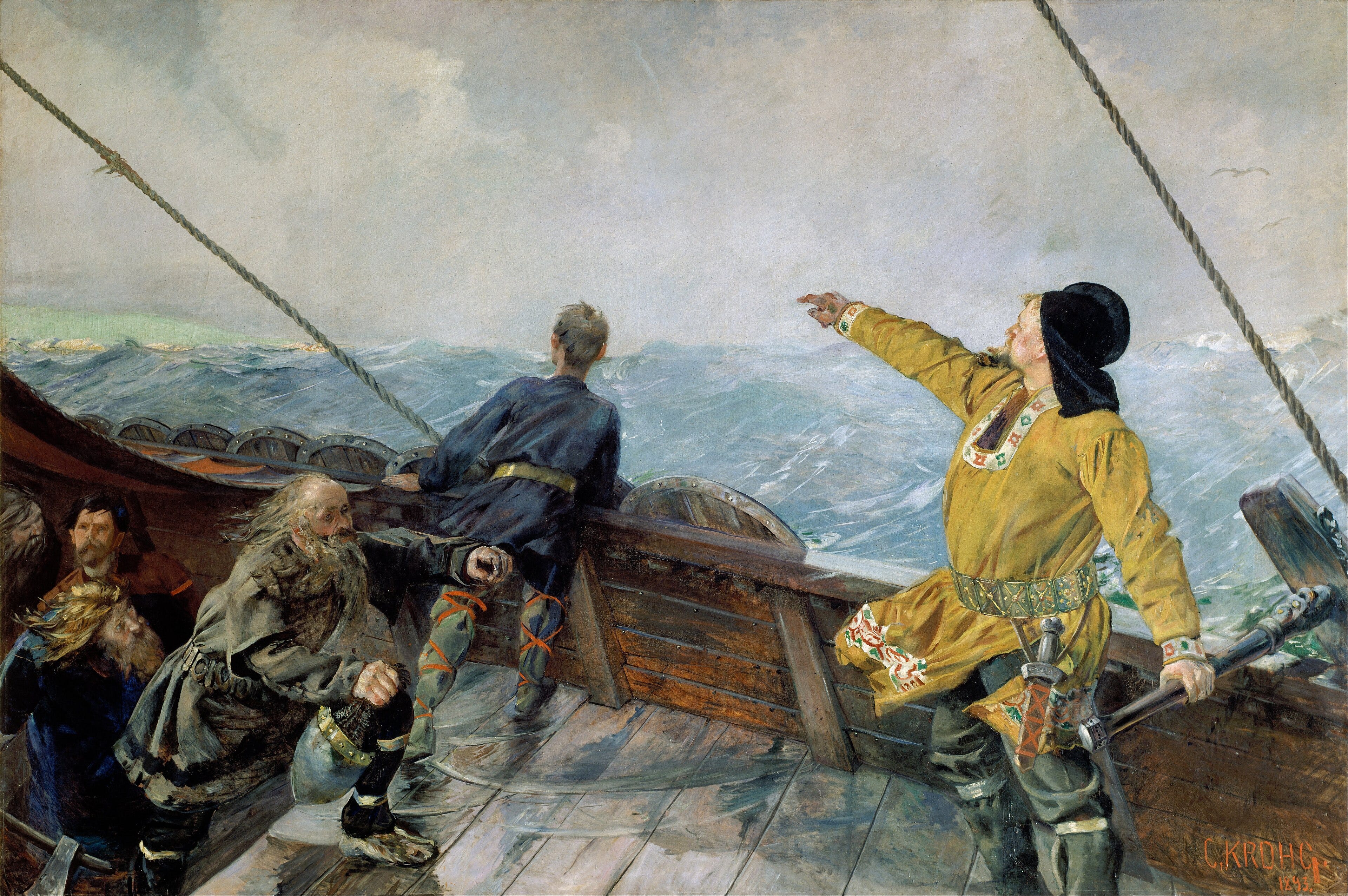
Karlsefni and his wife Gudrid gave birth to a child who they named Snorri Thorfinnsson. Snorri would be remembered for being the first European child born within the borders of North America. While watching over the child, Gudrid is visited by what appears to be a spirit or an omen — claiming to have the same name as her. And at the same time that she is being visited, a Native American is killed by colonizers for the first time. A Skrælling attempts to steal a weapon from one of the Icelanders and is subsequently killed, leading to a mass slaughter of the local Natives. The phantom-Gudrid appears to have been the very omen signifying the first sin upon ‘American’ soil. Previously, trade occurred with beneficent intentions: easier survival ensured upon both sides, since travel and exploration were not inherently negative acts. In fact, they were wholly human acts which had been conducted for millennia. And certainly, the slaughter of a country’s natives was nothing genuinely new either, but as we know, the slaughter of the Native Americans will signify a new level of depravity never before seen. Could this be, perhaps, why Gudrid saw the ghostly version of herself? a version described as being a “Shadow, faire-hair’d, pale, with the most enormous eyes” (633). Gudrid, a new mother, has now associated her bringing of European life into this New World with the very concept of death. Just as she had brought life into the world, so would her people bring their Northern Kinsmen, the Kinsmen of Death, to the New World. No, it would not happen immediately, for, as we see, many of the “Westward Escapes, of Helgi and Finnbogi, and Thorstein the Swarthy, and Biarni Heriulfsson,” (634) would fail to reach America. But the European touch will have reached this continent, nonetheless, bringing the very object of weaponization and death to its shores.
This white-faced phantom is the exact same entity that Stig was working for, when he described them as the whitest of Northern folk — not merely the Scandinavians, but those far further North and far whiter (in 2.62). It was the very act of death and genocide brought upon a nation. And again, Stig himself is not to any extent the epitome of evil (as a future white figure like Blicero would be in Gravity’s Rainbow), but he was hired to produce results for these entities. He, like Mason and Dixon, was hired for the purposes of death and Empire. It should be no surprise that he was admitting this to the embodiment of the deadly sins.
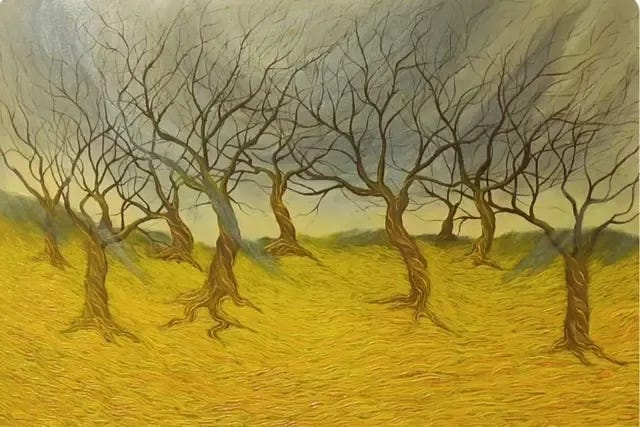
Back with Mason and Dixon, whispers have begun to reach them, telling them, “No...no more...no further” (634). Time has passed since Stig’s telling of the Greenland Saga, and it appears that Mason and Dixon have begun their return west, knowing very well via this ghostly voice that the project still had a chance to be stopped — that, if the Proclamation Line were not passed, life in untold numbers could be saved. This voice may very well have been the same voice that spoke Gudrid’s name with Gudrid’s own voice — an omen that said: death cannot be stopped, but at least many could be saved if you turned back now.
The voice continues to speak: “You are gone too far, from the Post Mark’d West,” and Dixon responds, “as if we didn’t already know” (635). Mason, too, knows this. He, having reached the Alleghenies once again, reminisces over the act of rising dough which he recalls his father teaching him how to produce. He senses the pull back east, to the Post Mark’d West and beyond. Mason knows that he and Dixon were lucky enough to be saved from the battle upon the Seahorse (1.4), and that this should have been taken as a gift from the gods of death that they were not killed there, or in Cape Town, or upon Saint Helena... or back in England... or in their three years so far in America.
And for a few months, they listen. Though it isn’t really listening if they’re waiting for approval, is it? They spend months near Philadelphia, waiting for “Sir William Johnson to negotiate with deputies from the Six Nations […] as to the continuation of the Line beyond the Allegheny Crest” (636).2 Ignoring the very pleas of the Earth, they wait for their kinsman to beg the original inhabitants of this land for permission to continue on. And eventually, they gain that confirmation, making it back out to the crest in July of 1767.3
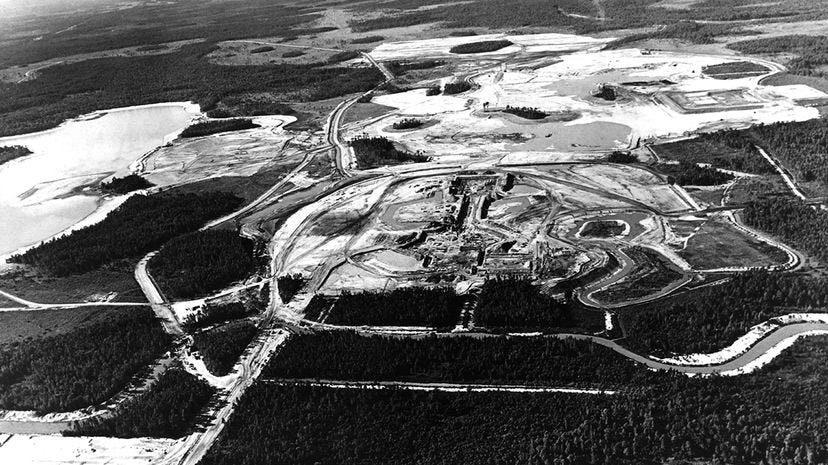
On their way back out west, they meet with former co-travelers such as Luise and Peter Redzinger — Luise being the woman who Cherrycoke spoke to in the carriage on the way to Knockwood’s Inn (2.35) and Peter being her husband who she at first was trying to dissociate from after he fell into a pile of hops and who subsequently became far more of a prescriptive Christian (2.35), but eventually found herself wanting to go back to him (2.49), leading her to leaving the party. We also learn that sometime between Zhang’s telling of the Hsi and Ho story (2.65), he had abandoned the survey party in “a mysterious Absence over the Winter” (636). However, Zhang is back and tells them that he is lucky in that Zarpazo, the Wolf of Jesus, has abandoned his quest to eliminate Zhang due to the fact that he received “an irresistible offer to travel to Florida and be one of the founders of a sort of Jesuit Pleasure-Garden” (636). With the Jesuits being an intelligence agency analog, the only potential thing that Zhang could be referencing in regard to a ‘Jesuit Pleasure-Garden in Florida’ is, as Biebel also claims, Disney World. This could very likely be in reference to Project Future, in which the CIA was used to buy up dummy corporations in order to purchase well over 20,000 acres of land for Disney World to be built without any pesky questions or the need to bring land speculators into the fray.
While the connection between Disney and American/European Intelligence may seem absurd, these connections are not really far-fetched at all. Disney itself is one of the greatest profiteers in, well... the entire world. At the time of Pynchon’s writing, Disney had claimed incredible tracts of land throughout the world for its amusement parks and had also begun its monopolization of the entertainment and film industry. With such a sway in entertainment, it could potentially enact a form of ‘Operation Mockingbird’ style infiltrations on top of buying up those vast tracts of land to profit on commodified serotonin release and commodified nostalgia. Therefore, in the choice between eliminating a figure who may have learned some things that he shouldn’t have (a la Zhang and JFK) or creating a rising Empire of endless capital which would only grow far beyond what Pynchon could have imagined at the time of his writing, these intelligence agencies would of course choose to build. For, a singular man held no sway over anyone, in reality.
While here, at the Redzinger farm, Armand Allègre joins them. Recall that Armand and Luise Redzinger had begun to form a romantic bond given Armand provided Luise with the freedom that she needed from the stoic form of Christianity she had been subjected to when with Peter (2.38).4 Therefore, Armand joining his onetime lover, Luise, with her reaccepted husband, Peter, is now in quite the awkward situation. With Armand also having connections with the infamous Mechanickal Duck (first explored in 2.37), he has brought a sort of progress to this new world that represented the horrifyingly progressive side of mankind which was now pairing itself with the horrifyingly conservative side (that being Peter and his belief that Jesus has given him free reign). Discussing the Duck, Armand claims that he has “pass’d altogether from her Care” (637) in the same way that Peter had the vision where Jesus too had left him (2.49) due to his supposed understanding of all that Jesus had wished to teach him. Therefore, when discussing the Duck, Armand states that “Perhaps, by now, she has taken in her charge so many other Souls as troubl’d as my own” and Peter responds by saying, “But, Time, surely, by now, no longer matters to her? […] no longer passes the same way” (637). These two men — the negative forms of both conservatism and progressivism — agree that the inherent being of the Duck (as a progressive technological entity which would instill conservative values and traits throughout the West) has infiltrated the continent. And, to the both of them, that was an overall positive. All the while, the two of them consume vast amounts of food and flesh, solidifying the comparison.
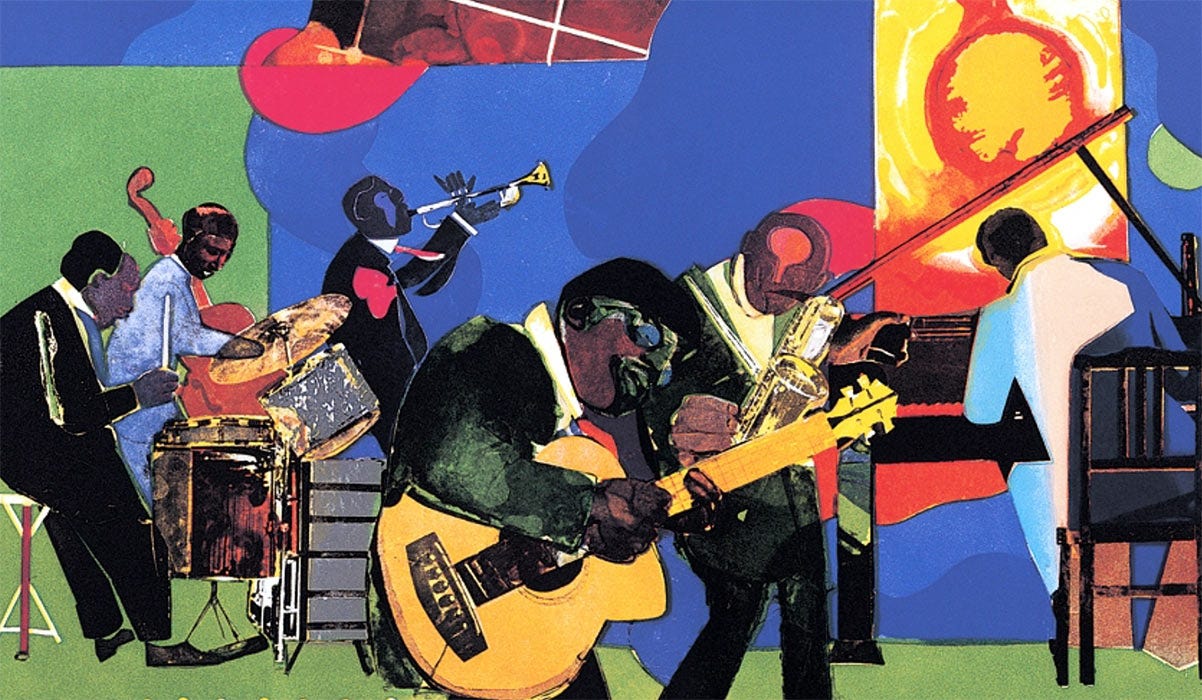
The survey party’s instruments arrive in Cumberland, Maryland on July 7th, 1767.5 While Cumberland may not be a very well-known or important city today, back in the time of Mason and Dixon, Cumberland was the second largest city in the entire state and served as an incredibly important waypoint for those trying to cross the Alleghenies. In that time period, it served as the symbol that was literally separating the captured east from the desired west. And it really does bear those same things we have come to expect from western progress: “a Street-ful of Business-Folk who must mind their Watch-Time, often to the Minute, all day long [and] Riflemen [who] sit out on the Porches of Taverns and jingle their Vent-Picks in time to the musick of African Slaves” (638). In other words, the unceasing progress of business and the seizure of black culture for white entertainment.
It is here, in Cumberland, that Mason and Dixon lodge with one Thomas Cresap — another historically real character who Mason and Dixon did actually stay with at this time. Cresap traveled and attempted to settle in many areas in Delaware and Maryland in the 1730s, 1740s, and early 1750s, including many places that Mason and Dixon had already passed through. He eventually settled here in Cumberland (after a series of mishaps that he is about to recount) where he sat proud of his work, claiming the town to be a Utopia. Cresap believes himself to be so incredibly superior that he could still undertake any task, “long as these damn’d Knees don’t betray me”6 (638). Like many men of his sort, he believes himself to be essentially a god and yet is always proven to possess the same mortal flaws as anyone else.
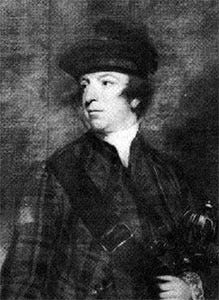
While showing Mason and Dixon how good of a shot he is, Cresap relates a series of events in his life where he attempted to settle or live within other lands between Philadelphia and Cumberland.7 However, given he was an ‘agent’ of Lord Baltimore who was attempting to claim land for Maryland, Cresap was considered a criminal by the Penns of Pennsylvania who sent many men to try to imprison him until he was eventually captured by Samuel Smith and a troop of twenty-four men in 1736. He similarly tells him about his son Daniel’s involvement in protecting him through the series of events that eventually led to him nearly drowning when he was saved from death by Samuel Smith who subsequently put him in chains.
Cresap asks Mason and Dixon if the story that they had heard from Samuel Smith in Pennsylvania was similar, or if Smith placed himself in a better light than Cresap did.8 Hilariously, Dixon is able to get in a single sentence before Cresap once again continues his story, cataloguing his journey further and further west, trying to live in other settlements, being robbed of a massive number of pelts, eventually landing here in Cumberland. Despite being an incredibly wealthy landowner in one of the largest cities in Maryland, Cresap laments over the hardship he has overcome, essentially believing that he has gone through hell and back, and that because of that he deserves to sit on his laurels in his large home with his extensive extended family. No mind to the land that he may have stolen or whatever the American Project may have entailed; he was the one who struggled, so he deserved this.
His story continues: Cresap, after arriving in Cumberland, helped improve the roads out west, specifically widening the road that Braddock and George Washington would use during Braddock’s Expedition (largely discussed in 2.52 and 2.62). He claims that by doing this, he and those who helped him “were th’ original Mason and Dixon” (641). This provides a great parallel to Mason and Dixon, showing how that the longer the land was being settled, the fewer barriers or attempts to stop such settlements would arise. Now that those Natives were ‘taken care of,’ and now that specific legalities, treaties, and contracts were worked out, all Mason and Dixon had to do was chop down a few trees and map the stars onto the Earth. If anything, Cresap’s story goes to show that this project had been considered and planned far before Mason and Dixon were even alive. On top of this, it is merely another one of those pieces of forgotten history which helped build this nation as it is today and yet which few souls on Earth have heard of.
Dixon asks Cresap, “What will the Mohawks that are to join us think of our Instruments, then?” (641) referencing the fact that now they have been allowed to map west of the Proclamation Line, Mohawk men would be traveling with them. To this, Cresap responds, stating that the Natives would likely be asking, “Why are you doing this?” (641). And alas, this leads to another epiphany for Mason who asks himself, “Why am I doing this? […] I mean, I supposed I could say it’s for the Money, or to Advance our Knowledge of,—” (642). Here, Mason is not only calling into question the project he is a part of, but is making no excuses for it. In fact, he is well aware of the excuses he has made in the past, hence his statement that he supposes he could claim that he is doing this for the many reasons he has stated in the past like money or the advancement of the sciences. But there is no pretension anymore. He knows this is not the case, but he also cannot fathom why else he would participate in this. His questioning leads to what appears to be a marital spat between him and Dixon, to which Cresap placates them. Cresap’s placation gives us some hope for the future, however miniscule that hope may be. In Cresap’s time, these things were not argued about. In fact, Cresap knew damn well why he was committing himself to such a project; he simply did not care. Mason and Dixon, being of a newer generation, are more aware of the evils at hand. In the same way, we are more aware than our parents who were more aware than theirs. Does this mean we will change what we are a part of? Well... only time will tell. But it certainly has not led to a change yet.
After a meditation on many of the other new ‘things’ brought west — from real-estate markets to fine wines and whiskeys — Dixon asks if anyone has “heard of the Black Dog in these parts” (643) to which Cresap claims that no dog could stand against his dog, Snake. This name, Snake, is heavily prevalent in Gravity’s Rainbow. It first was mentioned (not via the name, but via the horse mentioned) in the vision of Tyrone Slothrop when he was down the drain at the Roseland Ballroom, where Snake was a horse being ridden by Crutchfield, the “‘archetypal’ westwardman” (Gravity’s Rainbow, 1.10, pg. 67). It was, according to Slothrop, the vehicle which the original colonizer rode as they traveled west, slaughtering Natives and securing land for themselves. Later in that novel, Tchitcherine rode a horse named Snake as well, traveling with Džaqyp Qulan through Kyrgyzstan while helping form the New Turkic Alphabet (Gravity’s Rainbow, 3.5), another instance of colonization through the control of language. Finally, Greta Erdmann was seen riding a horse named Snake as she told the story of her past to Slothrop while aboard the Anubis (Gravity’s Rainbow, 3.17). Erdmann was the same woman who fell prey to the epitome of the Nazi genocidaire, Blicero, and who literally gave out her own daughter as a sexual object to anyone who wanted her — another thing that was necessitated by the expansion (or at least the symbolic expansion) westward.
So here, Cresap’s dog is named Snake, meaning these many iterations in Gravity’s Rainbow of the Horse named Snake, occurring almost 200 years later in the 1930s-1940s, were reincarnations of whatever Cresap’s dog symbolized. Snake, in 1767, “[had] a reputation as a ratter,” (643) yet found more pleasure in merely killing his prey than actually eating his prey. He killed for pleasure as opposed to necessity. It is no surprise given we have just heard of the comparison between the east and the west as a parallel to civilized and uncivilized society, showing that “There, [in the east] you forage for food already dead. Here, [in the west] they encourage you to […] kill what you eat and eat what you kill” (643). Snake, therefore, is that eastern creature which kills for pleasure (i.e. profit) rather than necessity. The death that Snake brings about is not to survive nor is it to satisfy his own hunger but is merely for the experience of death itself and to gain pleasure off of that death. And Snake, in both the form of the dog and the horse, is taken that lust from back east to the now colonized west.
Mason begins to question Snake, asking him, “I was but curious after the whereabouts these Days of the Learnèd English Dog, or as I believe he is also known, Fang” (644). Fang was last seen incredibly early on in the novel (1.3) and represented a sort of Pythian Oracle who was able to connect Mason to the other side while imitating a being who was domesticated but who also domesticated those who domesticated it.9 Mason is once again seeking a path to that spiritual side — or some sort of Oracular answers. We have seen the comparison between the Greenlanders and the ‘Americans,’ seeing how the colonization has changed from something that once instilled fear in the colonizers for the potential outcome of their evil to something that instilled fear of those who were simply other colonizers (just as Cresap feared his own imprisonment by the Penns). We have then seen this same thing change again, from the fear of other colonizers to no fear at all (Mason and Dixon and their internal fear of wrongdoing). And Mason knows this, but continues to look in all the wrong places to solve his existential qualms. He looks for talking animals rather than making actual peace with the world that he is making worse day by day. When Snake does not respond, Mason even convinces himself that there is “only West remaining,” to which Dixon responds, “Are tha quite comfortable with the Logick of thah’?” (644).
As Mason and Dixon argue over these comments, walking away from Snake, we invade Snake’s thoughts for just a moment to see that he does, in fact, know of Fang, the L.E.D., but does not wish to give up Fang’s true story. It does not trust these men — perhaps due to the fact that they may ostensibly want to better understand the spiritual world that the dogs know well, but have not proven themselves willing to do anything to make the changes necessary upon such spiritual revelations.
And so, leaving Snake, remembering their conversation with Cresap in regard to what the Mohawks would think of their continuation west, they ponder about what lies out there: “I know something is out there, that may not happen till we arrive” (645). This thing that Dixon imagines has to do with, as he says, a “Herd of Buffalo as easily as Light from Elsewhere” (645). If Dixon was predicting something out there that would be brought into existence by their continued traversal west, then he could only be predicting two events of mass death: The Great American Buffalo Slaughter and the dropping of the Atomic Bomb (the light from elsewhere). While, to them, it may not seem like it just yet, their simple line will turn into an arrow, drawing genocide and slaughter westward. But this is not the first time this has occurred nor are they exempt from it even now. Just as a young child comes to show them “Something no-one has seen […] and no one will see again” (645) in the form of a newly shelled and eaten peanut, so too are the events they are currently committing and those that are yet to come. The mass killing of Buffalo and the bombing of Japan have never been seen in their exact form, and, once committed, will never be seen again in those exact forms. And yet, like the peanut, these genocides and acts of mass slaughter have merely changed from one form to another, sometimes seen and sometimes not. The Native Americans at the moment and for the past several hundred years have been genocided to levels the world had not seen, and genocides will proceed far past that of the bombing of Hiroshima and Nagasaki. Yet they will change form and emerge from realms unseen, only to be presented as something that has and never will be. We, like Mason and Dixon, will lie to ourselves and claim that these world historical events came out of nowhere and that our knowledge of them would prevent their reoccurrence.
Just as the Icelanders once learned, nobody will be safe from the spread of this Empire. The threat of death and greed would loom over every head until the light finally winked out for good. The wind whispered to them, and they failed to listen yet again.
Up Next: Part 2, Chapter 67
Vinland is also known as Vineland, which is the name of Thomas Pynchon’s previous novel, Vineland.
They originally reached the crest of the Alleghenies in July of 1766 (in 2.62), so they have been waiting almost a year before deciding that they could begin charting further west than the Proclamation Line.
According to Biebel, “Johnson gets approval for the extension of the line westward in June 1767” (Biebel, 228). So, they had spent at least five months dilly-dallying back east before finally receiving this approval and heading back west to continue the line.
Biebel, Brett. A Mason & Dixon Companion. The University of Georgia Press, 2024.
Not to mention that Armand became a sort of father figure for Luise’s daughter, Mitzi.
They had made it just past Cumberland Maryland when last out here, a few miles west around Frostburg. So, they are essentially where they were when they turned back for the winter (in 2.62).
Cresap would be around 65 years old here.
Almost all of his story to Mason and Dixon is validated by actual historical documentation.
We never saw Mason and Dixon meet Samuel Smith, so this must have been something that occurred in the period between chapters, maybe during their long stay near Philadelphia while waiting for the Proclamation Line to be rendered non-existent.