
Mason & Dixon - Part 2 - Chapter 63: Solar Deception
Analysis of Mason & Dixon, Part 2 - Chapter 63: Back East Again, Zepho Beck the Werebeaver, the Tree Felling Contest, the Eclipse

If werewolves are Nazis1, then what are werebeavers?
On August 4th, 1766, a couple of months after reaching the Proclamation Line (in 2.62), the survey party stands on the western edge of the Allegheny Mountains, ready now to turn back east as a storm begins to brew. This ‘return to the East’ is reminiscent of the last two times they turned back — the first being when they reached the Susquehanna and had to turn back to finish the Tangent Line (2.48) and the second time after they crossed the Conococheague and turned back to spend Christmastide in the east (2.52). Both of these journeys back (especially emphasized in the former journey) showed Mason and Dixon moving ‘Against the Day,’ witnessing the formation of the very nation that they helped build. Again, here they are, “returning Eastward, into Memory, and Confabulation […] so claim’d are the Surveyors in their contra-solar Return by Might-it-bes, and If-it-weres,— not to mention What-was-thats” (618).
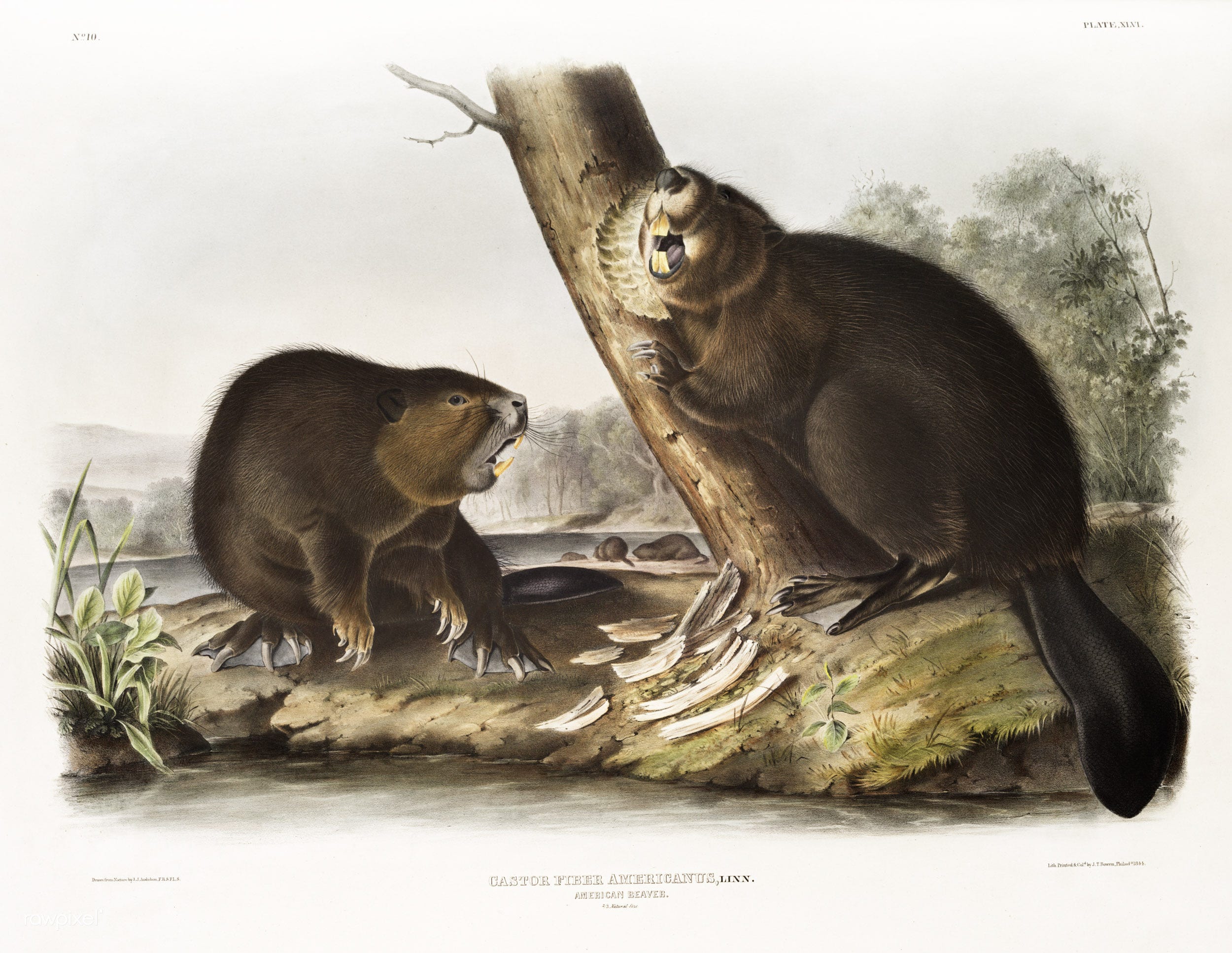
One of the first things they come across is a house that they had missed on their journey out to the Proclamation Line. This is the home of Zepho Beck and his wife Rhodie Beck. We learn about the recent history of Zepho Beck, having been prone to exhibit werewolf-like symptoms during full moons, but rather than turning into a wolf, he would turn into a beaver (Kastoranthropy: similar to Lycanthropy). During these stints, Zepho found himself tearing down trees, carving them with his teeth, and swimming down the river only to scare away the real beavers. What could this imply? it being the first alteration of the nation that Mason and Dixon see upon heading back east. Nazis and fascism, clearly, do not yet exist. We have no Schutzstaffel attempting to blend right back in with the American or European populace. Instead, what we have here is the clandestine colonizer — a man who, as he would say, only does the same thing that the nation’s natural furry inhabitants do. Yet alas, they do it by some natural instinct which in turn provides innumerably complex webs of organic contribution to the surrounding ecosystem in whatever niche they may be a part of. He, on the other hand, as a part of the newly mapped American frontier, becomes a perverted version of it. Something that destroys these trees in a gluttonous orgy, terrifying the beings who had done it for no reason other than existing for the past few hundreds-of-thousands of years. Mason and Dixon may not have created this type of character, but they certainly normalized it, hence why they did not see his house when they first passed by this area. Now, destruction and colonization have become naturalized for Back Inhabitants themselves.
Zepho and his wife, Rhodie, are aware that what Zepho is doing is unnatural. It is the destruction of a natural landscape for no purpose outside of pure, impassioned gluttony. She sees that “Zepho’s no Carpenter. […] And it gets worse. He believes that Indians are out setting traps for him, aiming to capture him and trade his Pelt for Weapons. Sometimes he does say ‘Scalp’” (619). So, Rhodie knows that there is no reason for his doing what he is doing as it bears no purpose outside destruction; and even Zepho can see that there is a genuine reason for the Native Americans wanting to quite literally scalp him for his crimes. But he is not the only one. Voam adds that “Zepho’s not alone, there’s been an Ulster Scot with a Taste for Swamp Maples, […] in fact, enough Kastormorphism among White folks out here, since we first started settling, to populate a good Lake of our own” (620). Mason and Dixon’s line and their visto would have been a terrible scar across the continent, but the participation of every common man only increases the rate at which this continent will be colonized and slaughtered.
Rhodie — even understanding that Zepho is performing an evil act — believes that they can come to benefit from his ability. She says, “all at once I had this idea for a Contest,— […] Suppose you and that Swedish Axman Stig were to—” (620). The contest is proposed as a race between Stig and Zepho to see who can fell the greatest number of trees. Just as the average person today knows they cannot match the power of a true man of industry, Zepho voices his unsurety. But once his pride is tested, he believes that he can achieve the same level of ‘greatness’ as these men.
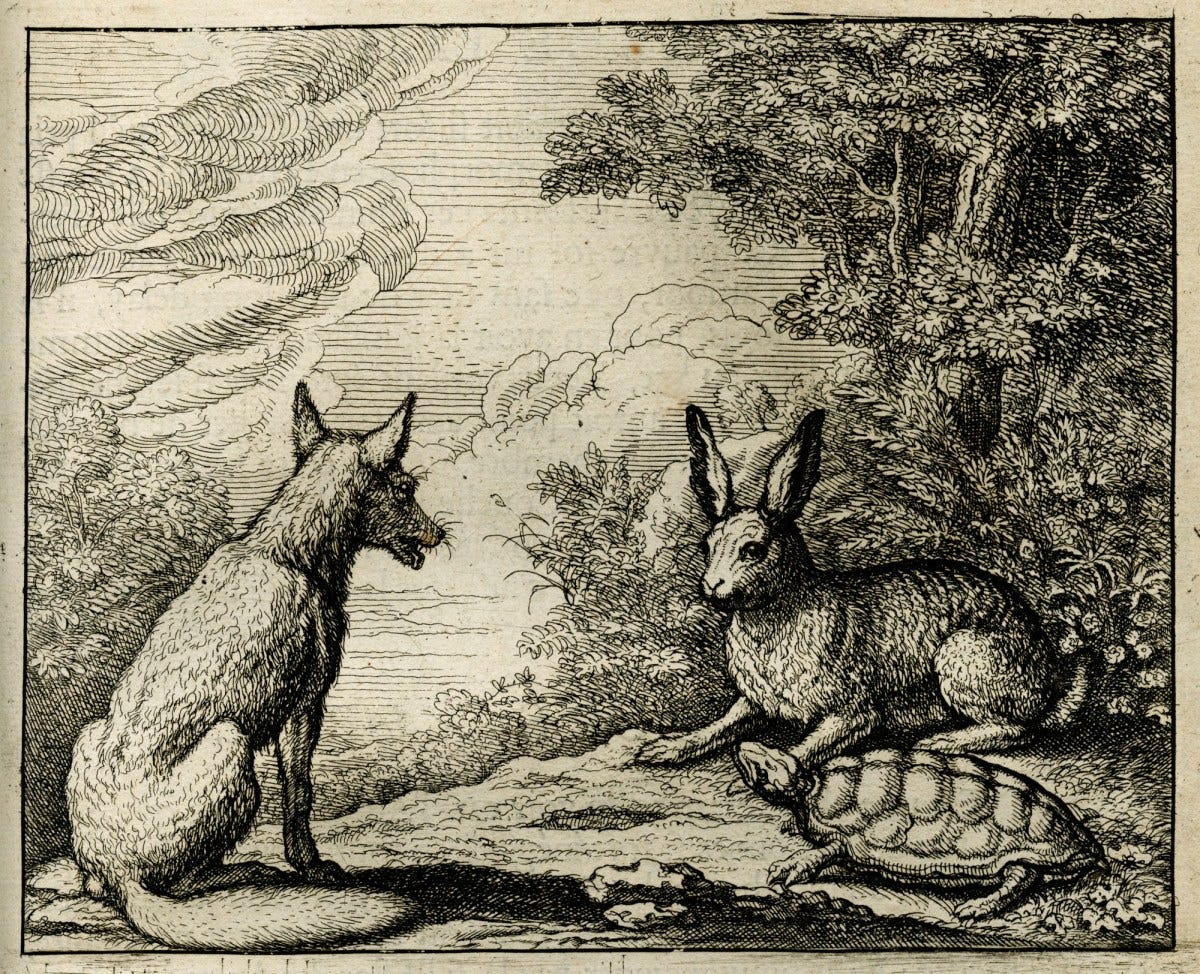
So, on August 5th, just a day after the survey party arrived near the Beck house, Zepho and Stig line up, and Overseer Barnes starts the race as if it were a sporting event: “Gentlemen, let’s clear us some Visto!” (621). Initially, Stig — the man of the industry (and a spy to boot) — believes he has so much the better chance of winning that he merely sits there and gloats while Zepho takes off.2 The race proceeds with Stig unable to catch up no matter how hard he tries, with men placing side bets on specifics like numbers of trees felled. But, in the end, a surprise occurs. August 5th, 1766, was historically the day of a solar eclipse, and near the end of the contest, the eclipse forces Zepho to transform back into his human form, making it impossible for him to win the contest.
What does this all signify?
First of all, the coming ‘progress’ of western development will normalize the idea that man is superior to nature to the extent that man will be able to alter nature to their very wishes in the same manner that Zepho did. Regular citizens will begin to see this as their God given right. Then, seeing the willingness of man to commit these sins, the men who began this normalization will reinforce the idea that committing such atrocities is the only manner by which lowly men can act to achieve the same heights as the Elite. Basically: sell yourself to the same project we have been professing, and you too can be as wealthy as us. It is essentially the modern belief that if you work hard enough at something, you can defeat the Elite at their own game and make it big. And sure, often at an individual level, many may be more naturally equipped to perform a task to a better degree than a singular one of these Elites or industry men, or the individual may even be more determined to defeat them... leading the individual to outperform them. But alas... many things besides ability and drive stand in the way between our ability to outdo these men. The very world itself seems against us.
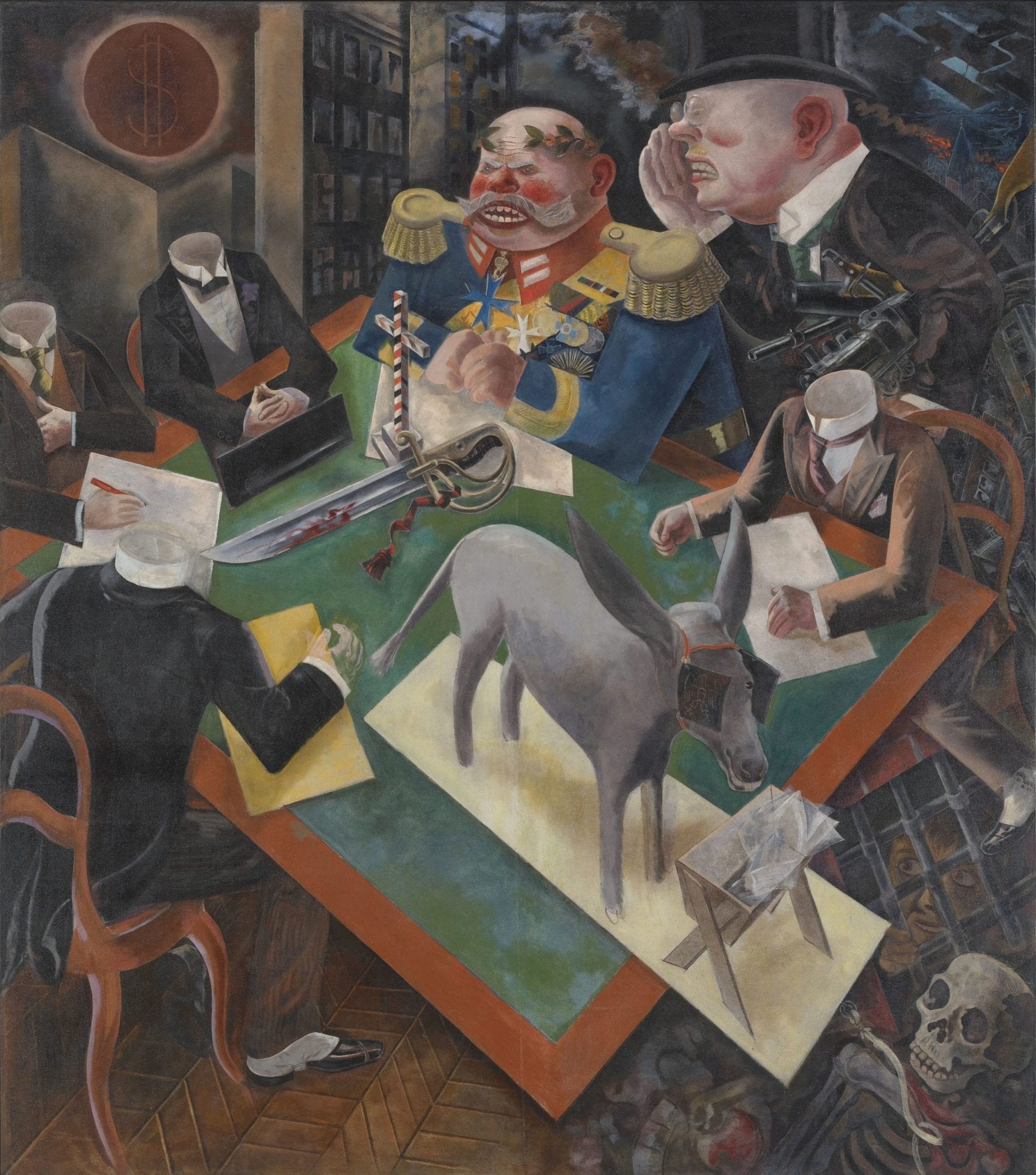
One of two things could prevent us from achieving these goals. First, the very world that the Elite have crafted would not allow such a thing to occur. They have built in enough safeguards to prevent the lower classes from competing against them. The promise may be high enough that these classes will still attempt such a thing, but something like the eclipse (or anything They may set up to put a stop to it) will always get in the way of actually allowing us to make it big. Secondly, those who run this nation have access to far greater resources and more plentiful tools than we do, allowing them to predict certain events like solar eclipses. More specifically, they have mathematicians, scientists, television personalities, writers, armies, advertisers, bankers, and vast sums of money to fund whatever project using whichever of these entities they want, which in turn makes it far more impossible that we would ever have a chance at defeating them at their own game (let alone even making it big on our own terms). The entire point is to make the working class believe they had the ability to do something of this sort so that they would continue helping the project along to no benefit of their own. Working class men and women will continue striving for these same goals, working day-in day-out, thinking they will one day have the chance to live off the fruits of their labor. But the world has been arranged so they will never truly be able to do so.
But what if we figure this out? If we learn that we have been lied to and conned, can we do anything about it? Well, Zepho knows the answer: “Not even a Philadelphia lawyer could win with an Argument like that” (622). For, They own the lawyers, as well; They have written the laws in such a way that profiting off of our misery is entirely within their rights. And we cannot do a single thing to stop them.
In the end, Zhang states that long, long ago, men would have been killed for attempting a deception of this sort. He references the story of “a Pair of Astronomers legendary in China, nam’d Hsi and Ho” (622) who had failed to predict an eclipse. These two Astronomers will have many parallels with our own pair, Mason and Dixon, and their story will be told next chapter.
Up Next: Part 2, Chapter 64
Werewolves as Nazis are an often made historical parallel and something that Pynchon has explored in other novels (mostly Gravity’s Rainbow though also in Mason & Dixon lightly in 2.56).
This is a hopefully obvious allusion to the Tortoise and the Hare fable by Aesop.