
Mason & Dixon - Part 2 - Chapter 59: Laws Across Lines
Analysis of Mason & Dixon, Part 2 - Chapter 59: Tom Hynes and Catherine Wheat, the Fight for the Baby, the Trial, a Christmastide Wedding, Hynes and Shelby

North Mountain is about as far as the survey party made it west before heading back east for the winter (2.52).1 They have finally made it back here only to find Captain Shelby (the man who they left their survey equipment with) “engulf’d as ever in Turmoil” (575). Captain Shelby was a Justice of the Peace, meaning he worked for a local Pennsylvanian court and handled minor offenses and misdemeanors. Based on some decision that he made “over the winter involving Tom Hynes,2 Catherine Wheat, and their Baby,” (575) various citizens have asked Governor Sharpe (the Governor of Maryland) to remove both him and his co-Adjutor, Mr. Joseph Warford, from their positions. The rest of this chapter will be following whatever this accusation and its outcome involved. Also, it is important to note that this dispute and the characters involved actually did historically occur and exist.3
The dispute begins when Catherine Wheat, daughter of the local distiller Conrad Wheat, gives birth to a child who was conceived out of wedlock. Going to Captain Price, another Justice of the Peace like Shelby and Sharpe, she claims that Tom Hynes is the father. Tom Hynes, upon telling his father about the situation, is told that he must marry her, his father being delighted at the fact that his lineage has not ended. He warns Hynes that one must “expect Law-Suits out here, from any Direction, for any reason, or none” (576). America is a land that requires the utmost obedience to law and custom, else repercussions (legal or otherwise) are bound to follow. Therefore, his father needs him to make this great news (great in his eyes) accepted under these laws and customs so that his chain will remain unbroken. The genetic line which he speaks of, using the symbol of a chain, directly parallels the chain that is being used to map the Mason-Dixon Line, thus paralleling how in both cases, actions against the accepted norm are taken only to be lawfully justified post hoc. For example, the Proclamation Line determines the point at which Mason and Dixon should stop their chain, and yet they are coming ever closer to passing it despite the legal and moral consequences, only to justify this after it has already been done.
Tom, however, has another idea. He would prefer if the good that came from this questionable situation benefited him, but that the negative that came from it would not affect him at all (wouldn’t we all want such a thing?). So, his conclusion: take the baby, leave Catherine. Of course, to do this, he attempts to make it fall within the realm of legality to avoid possible repercussions. He is not so inherently American (yet) that he fully comprehends the power dynamics which most Americans believe in: taking what is ‘rightfully’ yours.
This is where Shelby comes into play. Tom visits Shelby and asks him “to write him a Warrant to repossess the Baby,” (576) given after Catherine originally made claims that Tom needed to help pay for the Baby, she didn’t show up in court again in the winter when she was supposed to. So, Shelby (mostly in jest) writes this writ of repossession.
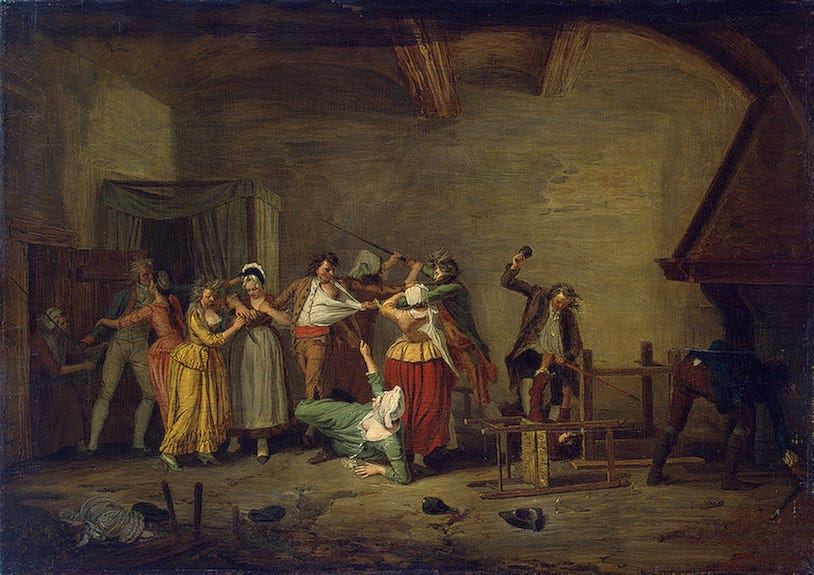
According to Tom via Shelby’s writ, since Catherine did not follow proper court orders, the baby belongs to him. How safe can this infant be with a mother who does not even abide by the courts of law?! As the party, including Tom and a number of other men, approach Conrad Wheat’s home, Constable Johnson even reiterates this point, yelling, “Catherine Wheat having fail’d to show up in Justice Price’s Court last Month […] is in violation of the Law, and pending Disposition, for the good of the Child must I order my Deputies to lay hands upon it” (577). He, as an American, does not see moral or traditional law as sacred. The child does not have any value as a person, nor does the mother have any right to the child outside of it being a commodity to be traded or bargained for. Instead, it is now subject to arbitrarily written laws that serve the betterment of the class or demographic with more power, only set to harm those who are simply trying to live to the best of their ability while following the common-sense code of morality.
Catherine’s family, however, is having none of this, and some of her brothers rush out to attack the constables and other men on Tom’s side. Eventually, the brawl moves to the inside of the Wheat house where the baby is tossed to-and-for, where fights amongst men and women break out, and where Tom himself begins physically beating Catherine while “informing her, in a Voice not entirely in his Control, of his intention to kill her” (578). The baby is stolen, then brought back after the thief is chased and beaten, and then stolen again where it is finally brought by Tom, Shelby, and the other Constables to Ralph Matson’s House.
Shelby makes the comparison that this debacle brings about massive parallels to another legal dispute and coming battle: “’twas the Stamp Dispute that brought us out, and whether the Assembly would pass its Journal. Tom’s domestick Drama gave us a practice run, as you’d say, for Acts of Publick necessity impending” (578-579). In other words, just as Tom wanted the law of America to most benefit him despite most traditional laws not being on his side (thus leading him to rewrite this law so that it would serve him) America will be doing the exact same thing when it comes to the Stamp Act. And, just as this selfish rebellion led to the brawl at the Wheat house, so too will it lead to the entirety of the Revolutionary War.
The group crosses the now extant Pennsylvania/Maryland border, from south to north. Giving the child to Captain Shelby, Tom Hynes then tells him that he “made the Dutch Bitch’s blood fly,” (579) to which, at the LeSpark’s house, Uncle Ives interjects stating (correctly) that these words appeared verbatim in the Proceedings of the Council of Maryland (see Footnote 3). Ives also states that, due to Shelby’s involvement with this action, Marylanders sought his removal from Justice of the Peace (the turmoil which Mason and Dixon happened upon at the beginning of this chapter—though, they have not arrived on scene just yet). The anger of the Marylanders was not even because of the ethical implications of stealing a child, but that “Shelby ignor’d the Power of the line, and chose to defy it” (579). America was going to become a federal republic where laws, power structures, legal proceedings, and leaders would vary across state lines. Therefore, the anger that comes from the Marylanders only has to do with this newly formed border. It gave them a power that they did not once possess — where they could abandon laws and morals they once held, or prosecute against any purposeful interventionism or attack on foreign soil. But this soil was not foreign; it was simply the same America across a line at a certain latitude. Imagine in indigenous times: telling the Natives that an action on this plot of land was good and righteous while a few steps to the north you would be potentially condemned to imprisonment or death. What sense really does that make? America will do the same thing to Britain, believing that Britain is imposing itself across the sea. In one way, it gives some validity to borders given they allow for separation from abuses of power or like impositions. However, it also shows that natural borders (and what is a more natural border than a literal ocean) are more readily comprehensible than something mapped by chains, mathematics, and stars. And finally, there is a massive difference between using these borders to separate from unfair taxation versus the ability to steal a child on one side of a line and not on another.
Like most judges and lawyers, Shelby does not even care that the law itself has been called to question but is more stuck on the fact that he himself has been disrespected. To make it worse, Conrad Wheat brings the whole party to a “[law]suit over the Riot at his House” (580). And during the trial that the lawsuit eventually brings about, Tom goes missing only to be found with Catherine sitting upon his lap. The two speak, flirtingly, Tom essentially gaslighting Catherine into believing that none of these past wrongdoings were done out of spite. He never would have hit or wronged her, he claims, and she responds, saying, “Maybe I was young then,— maybe even foolish” (580). Tom, therefore, is going back on his desire. He now not only wants the goods which he believes that he is owed, but is having lusty thoughts toward Catherine again. His gaslighting is thus his belief that because of his social position and because of the side of the line he was born on, he is entitled to all the spoils he is owed.
Finding these two flirting, the party convinces Tom to marry Catherine so he can maintain the peace. In all of this, it becomes apparent that the doings of the world are not merely subject to the absurdities determined by abstract invisible lines, by written federal laws, or by those policing and enforcing them on either side, but are also subject by the lusts of sinful men, the inability to emotionally regulate oneself, the desire to make hegemonic or economic gains, and so on. All of these laws and lawsuits, therefore, end up being nothing but a farce that reads like the plot of a comic novel.
It is Christmastide now (sometime around December 24th),4 and Tom promises that they will marry “Before the Year is out” (582). And so, on December 31st, 1765, the two are married. But of course, just as the entire chapter shows the insanity of this singular series of events, the wedding does not go as planned, with Captain Shelby stating (after Tom and Catherine have said their ‘I dos’), “I am delighted to be able at last to pronounce,— Jump, Dog! Leap, Bitch!” (582). And yes, as Biebel says, “No bullshit. The record actually has Shelby saying this line” (Biebel, 216).5
Tom awakes the morning after their marriage and drunkenly stares at the floral wallpaper in the room where they are staying. In a blacked-out, hung-over daze, he begins to recall the events of the day past. Yes, he did marry the woman who now sleeps beside him, Catherine (who he now so lovingly and friendlily calls Katie). And yet there is something else: “He recalls getting up in the middle of the night to piss, and being confronted with a Figure he at first imagines as the D[evi]l, because it bears a Pitchfork,— but which he presently recognizes as Capt. Shelby” (583). Already having his first writ nixed, Shelby is not about to have Tom abandon his wife and nix that one as well. So here he is, ready to threaten Tom back to bed only to be told that he was only out here to piss.
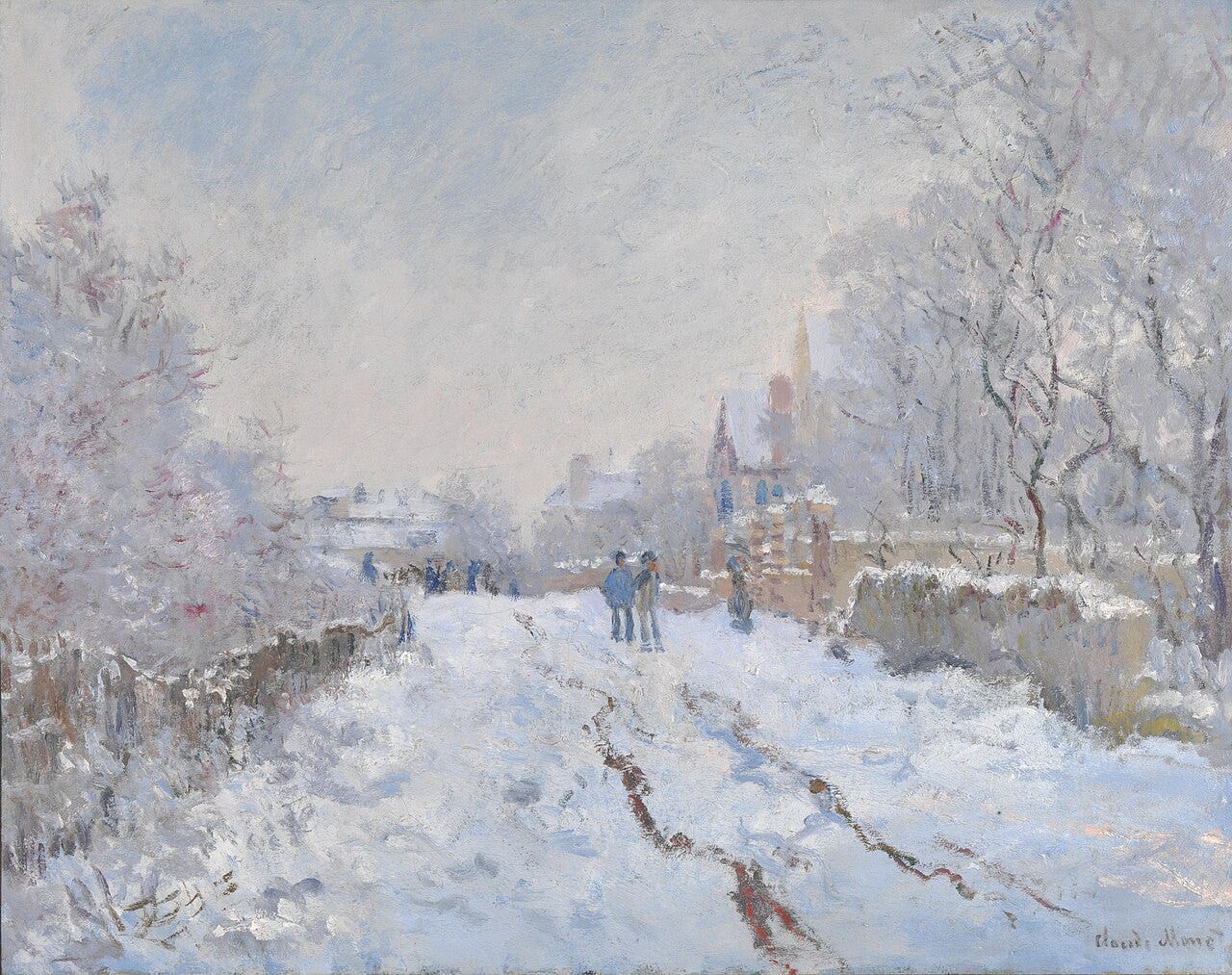
So, the two go out into the snow to relieve themselves, Tom pissing a heart into the snow, possibly signifying that change is, in fact, possible. Bad intentions come from immaturity, the desire for power, and many other root causes, but when these things prove to be or are seen to be farcical or harmful, it is possible to set them aside and rework one’s path forward — even changing one’s view of the world as a whole. Shelby, however, as always, merely signs his own name in the snow, symbolically claiming the very land as his. With his position as Justice of the Peace and with the power he has now been granted by the very existence of the new border, his thirst for power has grown. He asks Tom to join him with Mason and Dixon’s party whenever they return so they can all travel west, promising Tom the position as the “head of Shelby’s Men, a sort of Party within the Party” (584). Shelby, here, knows that he will never be the true leader, but if he can accept his position as a circle within a greater circle (a border within a border), then he too can hold the idea of Manifest Destiny. Alas, Tom desires to settle down with Catherine, and Shelby accepts this, but as we will see, Tom does not hold onto this desire for long.
In the end, the most visible conclusion is represented by the Mason-Dixon Line. None of this scene’s absurdities would have occurred without it. As with all human nature, there very well would have been misogynistic wife-beatings, patriarchal ego-complexes, and the desire to escape responsibility be it a responsibility that eats up one’s life, time, or money. However, none of it would have been written into law, been called to court, or been entirely unclear as to what the correct legal procedure would be if not for the line. There would have been clarity rather than differing laws upon each side of a non-existent line. The line would impose those differences on each other, neither of which would trump another except for the material facts that a certain thing occurred in this square mile while this other thing occurred in this one. Imagine, if all of this had occurred a mere few months earlier, before Mason and Dixon had arrived at North Mountain (2.52) — how much simpler it all would have been. But alas, they still have further to go, and this is by far the last border that will be mapped in the New World.
Up Next: Part 2, Chapter 60
It is also where we saw Zhang with the party during the time-skip that occurred (2.55) which would have occurred somewhere around this point in the story, though probably a little bit after given it seems like Captain Shelby had been back with them for a bit in 2.55. So, though the timeline isn’t perfect, my assumption is that 2.55 takes place around the same time as the next chapter (2.60).
Tom Hynes was actually mentioned at the very bottom of page 7 (1.1) when Reverend Cherrycoke was lamenting, wondering what even ended up happening to various party members like the McCleans, Darby and Cope, and Tom Hynes.
In the chapter summary in Biebel’s work, he states that the Hynes/Wheat/Shelby story “is drawn directly from the Proceedings of the Council of Maryland” (Biebel, 214) — cited below:
Biebel, Brett. A Mason & Dixon Companion. The University of Georgia Press, 2024.
Proceedings of the Council of Maryland. Vol. 32. December 12, 1765. Maryland State Archives. https://msa.maryland.gov/megafile/msa/speccol/sc2900/sc2908/000001/000032/html/index.html
Proceedings of the Council of Maryland. Vol. 32. March 27, 1766. Maryland State Archives. https://msa.maryland.gov/megafile/msa/speccol/sc2900/sc2908/000001/000032/html/index.html
Mason and Dixon, at this point, would have been at the pub near Harland’s farm (at the end of 2.52).
Biebel, here, cites the lines of the proceeding as 32:133.