
Mason & Dixon - Part 2 - Chapter 28.2: The Crying of the American Frontier
Analysis of Mason & Dixon, Part 2 - Chapter 28.2: Employee Benefits, Martha and Gershom, the Allegory of the Cave, Lead Plates, Electric Lines, Jesuits and Freemasons, Communication Networks

In Mason and Dixon’s meeting with George Washington at the recommendation of Benjamin Franklin, they have gotten a great taste of the coming world of real estate, and the evolution of how black communities and people will be treated in America during and after their enslavement. After the comparison between Gershom — Washington’s house slave — and the more modern day Black Hebrew Israelites, Washington, while all of them have been smoking some of Washington’s weed, ordered him to cook some of the Jewish meals he has recently learned to love. And having come back now with the food, the conversation between Gershom, the surveyors, and Washington now continues.
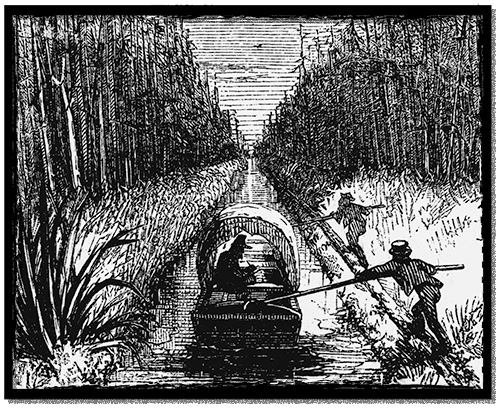
Gershom reveals to Mason and Dixon that Washington has gifted him with actual pay(!) — something that is quite obviously uncommon in this era. However, the stipulation was to consider investing this income in “Dismal Swamp Land Company shares” (279) — or, in other words, to take the money that Washington has chosen to pay him and reinvest it in a company of which Washington is a major shareholder. The profession which Gershom has been subjected to in order to survive, despite being slightly better than the average person of his status, also has many of the same stipulations that our work today does. In this case, the ‘privilege’ to take part in company shares and ‘reinvest for your future,’ all while the company’s owners or the company’s larger shareholders profited far, far more on the individual investor’s speculations than this sole individual ever could. And to someone like Gershom — a black man in the American eighteenth-century — this type of supposed privilege would be desired even more heavily given no one who he has ever known has had such an opportunity. So, whether he realizes he is being screwed over through this proposition or not, Gershom asks Mason and Dixon if he should invest. The two immediately realize that this is one of those things that they were told they should never even consider talking about to someone like Gershom, for powers far above them had warned them of the repercussions that could follow cluing in the lower classes on the nuances of the Market and of the economic politics that enslaved them to the labor force. Or just enslaved them literally.
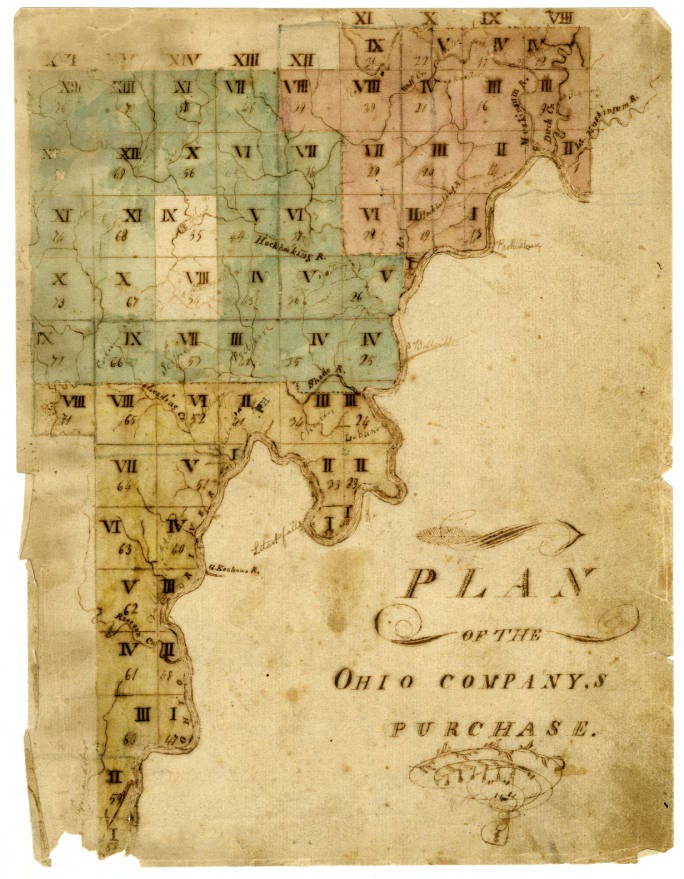
A few quick-fire cultural observations arise through the course of the smoke session. First, Washington, having already mocked — in a purportedly ‘good-humored’ manner — Gershom’s African American dialect, he now co-opts his Jewish dialect, saying, “It’s makin’ me just mee-shugginah” (280). Then, Martha, Washington’s wife, comes out with a vast array of cooked goods to serve the group, pitting her — a classic domestic woman in the same way that Elizabeth LeSpark was (though a bit happier, it seems) — as one of Gershom’s equivalents: a slave, though in a far different way. One who, as she stated, took care of those things which the white man would not be able to do on his own. Thirdly, Washington brings up the Ohio Company, a land speculation company which sought to bring the real estate market — and the capitalist empire in general — to the uncharted lands of the American West. These three ideas — the theft and malicious utilization of culture along racial and religious lines, the expected domesticity of the wife and the woman in general, and the expansion of private property and general capitalism — come together in Gershom’s response: “’Twas a world of Masquing then, Fictions of faraway lands” (282) and “what’s that, you want to put in a what, a Harem? why to be sure,— and how many Ladies would that be, Sir?” (282). This fictitious world, America, is the perfect spot for all of this to coalesce. It is just the place where cultural, ethnic, and gender-based exploitation could be used to further the Elite interest in land and property accumulation.
In all this allegorizing, Mason mentions Plato’s “Seventh Book of the ‘Republic,’” (282) famous for The Allegory of the Cave. This allegory places a group of individuals in the recesses of a cave, viewing shadows on a wall as reality. These shadows, however, are created by the individuals who walk behind them, carrying objects which craft these images, though doing so without the viewers being aware. In the allegory, one of these cave dwellers decides to escape the cave, not only passing those who create the only reality that they had ever known — the shadow-makers — but also escaping the cave entirely to see the real world outside. And upon returning to the cave and recounting his discovery to the others who had always been with him, nobody believes him. Whether it is because the illusion is too comfortable, or reality is too discomforting, they choose to live a lie than to face reality. Well, so too does every person here smoking pot with George Washington — other than Washington himself that is. He is the caster of shadows, or at least he who hires others to cast those shadows. Gershom, having been granted a much higher position than the unpaid, un-benefitted slaves, only sees that which he possesses over those others like him. Mrs. Washington, showing her intelligence in her knowledge of Socrates and Plato, along with the fact that she believes she is using her intelligence and her cunning to maintain her position of an upper-class housewife, similarly sees that which she has over others. And all of them — Mason, Dixon, Gershom, Martha, and even Geroge Washington himself — see their ability to scout out and claim private property as if that is the end-all be-all final step in claiming one’s supremacy over the world.
When Martha Washington reveals her knowledge of Socrates and Plato, she also questions Mason’s participation in the mapping of the Transits of Venus. Even though Mason and Dixon shushed each other when Gershom questioned them about his possible reinvestment opportunity, Mason seems fully willing to engage with her on this topic. He is well aware that while the outright-stated purpose of mapping the Transits of Venus was to further science, the real reason was so “that Sailors at last may trust their lives to this Knowledge” (283) — so that trade could pass across every sea, every ocean, river, and lake, with the utmost efficiency, not wasting one fraction of a second, one hour of paid labor, or one unnecessarily given benefit. And not just that, but also, “Observers station’d all ’round the world, even in Massachusetts,” (283) increasing the web of power, communication, and intelligence that the Elite held over the globe. George Washington even sings, “For we’re off, my Girl, to the end of the world,” (284) reminding us, and Dixon, of The World’s End brothel in Cape Town, which held its white painted walls and its collared and enslaved women (1.14). Dixon ignored Austra’s abuse and captivity, finding it better to stay within the willful ignorance of the cave than to burst out, fists at the ready, willing to fight for the horrors of which he now saw.
George and Martha’s song ends with the two of them “facing and gazing at one another with an Affection having to do not so much with the Lyric, as with keeping the Harmony, and finishing together” (284). While Martha is in a form of servitude to Washington, this does not mean she is within the stratum of oppression which Gershom lays. Martha still is of the Elite class just as Elizabeth LeSpark is of the Elite class, as well. We are again seeing levels within the strata, similar to how Jet, Greet, and Els sat at the bottom of their own class hierarchy being both women and children; but, due to being a part of the Elite colonialist family of which Cornelius was the patriarch, towered above the African men whom they lusted after. So, too, here, do we see a similar power dynamic occur — George and Martha singing and looking in each other’s eyes while Gershom tells a series of self-deprecating jokes, placing himself on the level of the Slave and Jester while placing Washington on the level of the Master and King. Martha likely finds joy in this, being so used to being in that lowly position when around those men of her own class, now feeling a sense of superiority. And Gershom, too, probably finds some glory in his position, seeing the slaves below him working in fields while he gets to smoke with the men in power. Each of these levels keeps the power structure going. No one wants to mess things up and end up on the bottom as a result. So, they accept their place, despite seeing the unfairness of the lot they’ve been dealt. They sing songs with those who hold power over them, tell jokes which belittle themselves and their community — all in order to maintain the small level of superiority they possess.
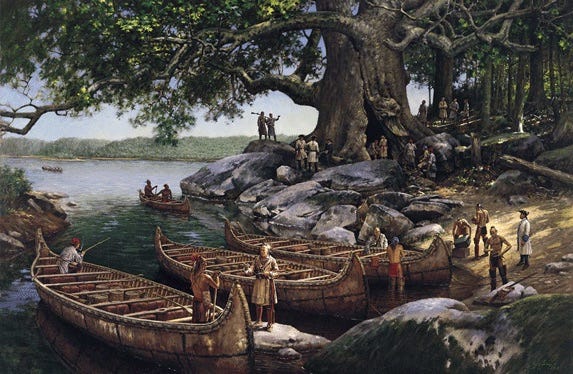
The conversation veers off into Céléron de Bienville, where Washington states that in 1749, the Frenchman “voyaged South from Canada, landing upon the shore of Lake Erie, following a French Creek to the Allegheny, where, to assert France’s claims, he buried a lead plate” (285). The stated reason for placing these lead plates at specific points near tributaries was to stake claim over the land and to send a message to the British that this was theirs. However, why lead? Washington states that the only possible reason was because metals like gold and silver were much too expensive and something like lead was durable. And yes, historically, this was likely the case. But something about lead and water should strike a chord. In every place the colonizers have stolen, water was polluted. Thales, as stated before (in 1.21), categorized water as the basis of all that exists. Thus, removing this element from the Native people is akin to making life and reality non-existent. If waters and wetlands are polluted with lead, as they now so often are, the Natives and the lower classes would be dependent upon the new rulers to maintain some semblance of life.
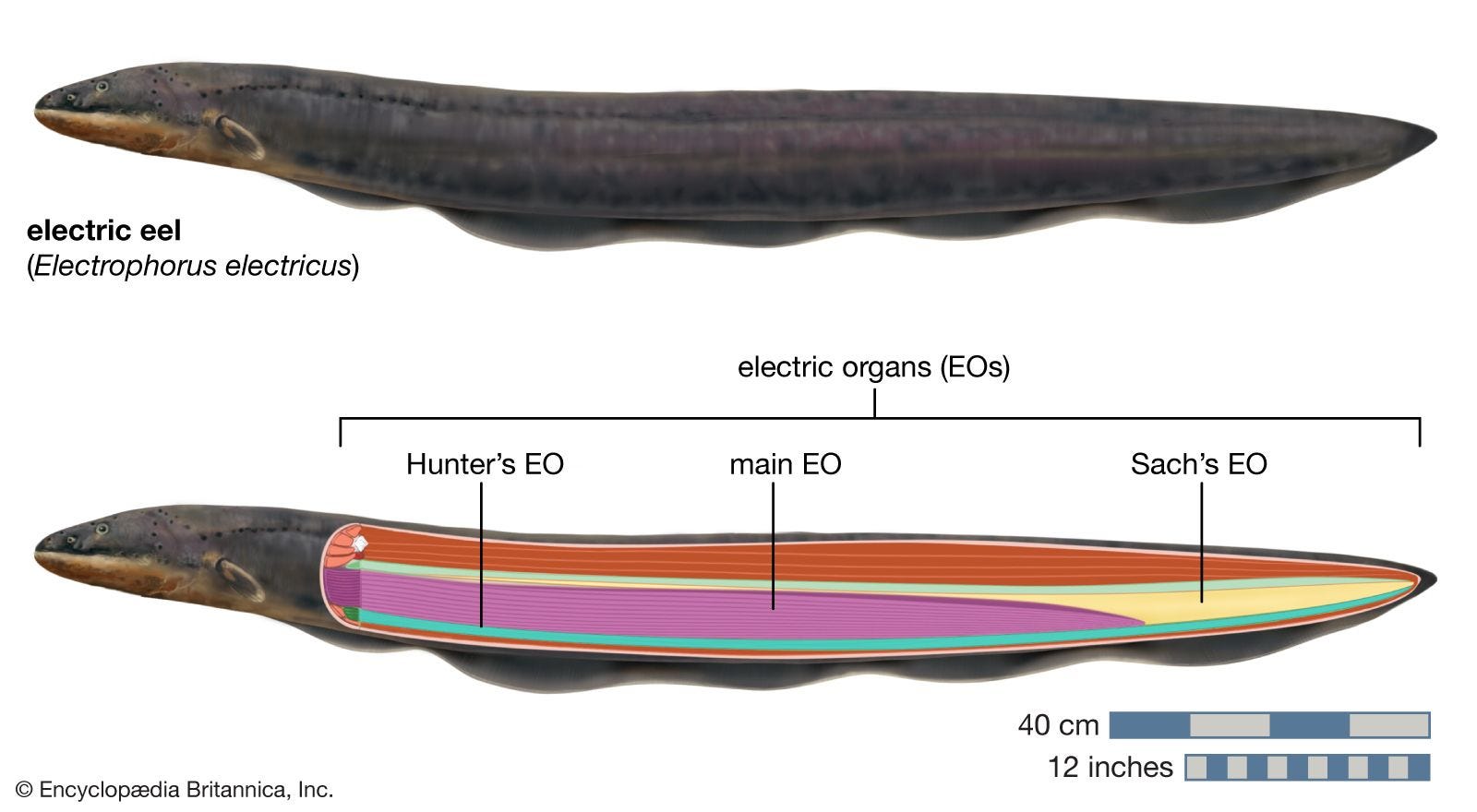
Thus, laying down these lead plates steals and claims property, destroys the natural resources thus making the Preterite dependent on the Elect for survival, and, as Dixon muses, “might plausibly have an Electrickal purpose” (285). For, electricity will soon run through this nation as its lifeblood, allowing for the progress of empire to echo the progress of technology, increasing the nation’s need for better amenities, better communication, better entertainment, and better transportation — all another form of dependence. The modern world could no longer survive without these conveniences. Could you hold a job without a phone? live in a sprawling city without a car? Dixon states that Mason’s dislike of electricity was due to his “childhood Misadventure with a Torpedo” (286) — a Torpedo being a name for the electric eel before the discovery of controlled electricity.1 This leads to an entire allegorical discussion about the lead plates, deciphering how laying down a single ‘plate’ would serve no purpose in the realm of electricity. For, even the Torpedo, “five-sixths of whose Length is taken up with these Electrical Plates,” (286) would not be able to properly defend itself with a single electric organ. Similarly, technological progress which now almost always involves electricity, would be useless if it was not ubiquitous. One would need the knowledge and study of electricity, and the laying down of endless electric plants and lines across the globe, “if you wish to produce any effect large enough to be useful in, let alone noticed by, the World” (286).
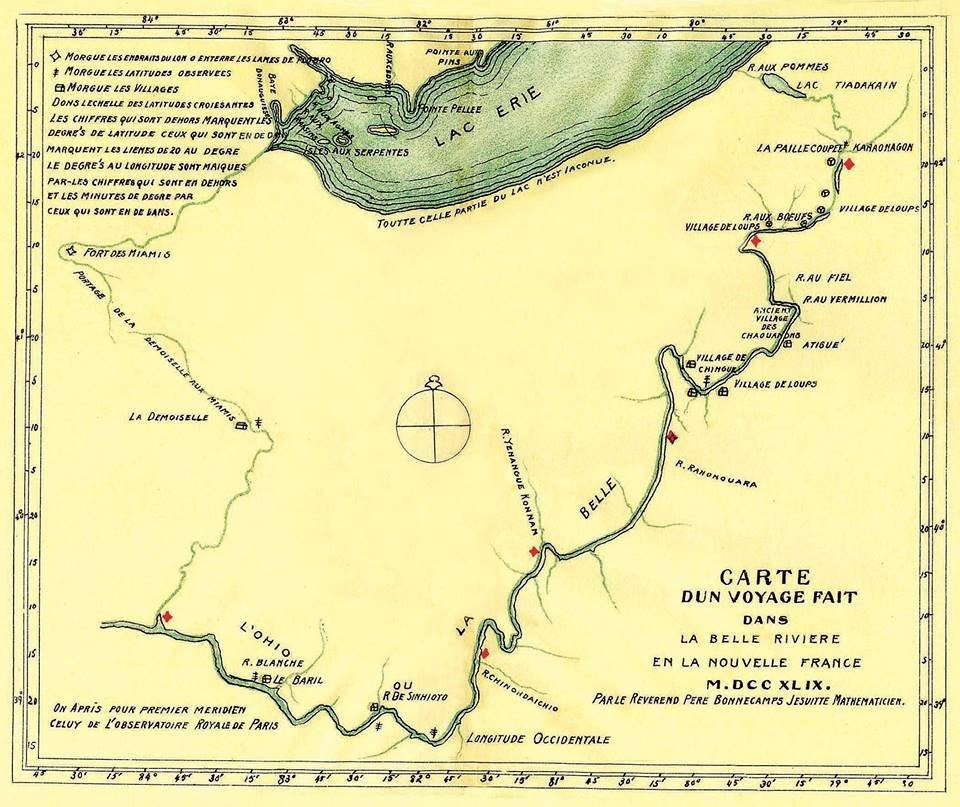
Since these lead plates were buried in Native American territory, it was inevitable that the Native tribes would eventually come across them. And come across them they did, fearing (rightfully so, given our analogies of contamination and relentless progress) what they could have meant. Electricity and elemental contamination, without the scientific knowledge that is now commonplace, would have only been explainable as a necromantic phenomenon. So, without the words or education to rationalize these plates, the Native Americans brought them to the British (given they were set by the French) in hopes that they could help solve whatever may be going on. Of course, the French settlers may have intended for this to occur. The French were well aware that the British would see this as if the French were declaring possession and asking the British to fight them for it (Biebel, 131).2 It is mutually beneficial to all colonizers to remain adversaries using competition. Westward expansion, if there was only one colonizing army, could have proceeded at a comfortable and relaxed paced, taking a few decades in this territory here, making this genocide a little more ‘humane,’ taking an extra few months to chart this mountain range or form this border, and so on. But with competition and a desire to claim the most territory possible, Westward expansion could proceed far faster, laying down those electrical lines and allowing ‘progress’ to flourish as quickly as possible, thus bringing in the profits for those who believed they deserved them.
Oddly, the lead plates, a few of which Washington had, bore Chinese markings upon them. Dixon, the first to realize this, raises Washington’s suspicions, making him think Dixon could be a Jesuit. Given the Jesuits (many of whom were French) had traveled to China on certain missions, and given that Washington, a freemason, knew of the Catholic3 hatred toward the Freemasons, it should be no surprise that Washington is immediately wary. Both orders, the Jesuits and the Freemasons, represented different facets of Elite power. The Freemasons, as has been discussed in Mason & Dixon and largely in Gravity’s Rainbow (especially Gravity’s Rainbow, 3.30), were an Elite group based almost entirely on wealth, power, and politics, while the Jesuits were a religious order holding power through religion. Thus, the two represented power on two ends of the spectrum: the former with money and politics, the latter with religious control. In reality, these realms now work together to achieve mutually beneficial goals; however, in the time of Mason and Dixon, this mutual goal was not yet fully realized. Especially since Washington and other Americans were attempting to break away from European religious monarchy. (Of course, they would only come to establish their own religious rule, but that’s beside the point).
So, Washington questions Dixon, using Freemason codes to ensure Dixon was not a Jesuit. Dixon, who had been told by friends of the proper Freemason codes, responds correctly, — “I’m traveling West” (287) — making Washington believe he was a Freemason himself. And this, to Washington, is great news. The response itself continues to show what the real goal here in America was. It was not to claim some new territories on the East coast, was not actually going to be bound by General Boquet’s Royal Proclamation of 1763, and would not tolerate the Native Americans attempting to hold onto their territory. It would be a Westward march — a Deathward march. Religious, national, and political powers would compete over the ability and self-destined inherent right to possess these lands. They would pollute the waters of nature on their journey, would set up metaphorical power lines so that progress and technology would give them the ‘power’ to make this genocide more efficient. And, like Washington does, the men in power would make everything seem happy-go-lucky, singing songs with their wives, treating some select slaves like ‘family,’ and acting like bumbling idiots when they and those like them knew exactly what they were doing.

What could potentially go wrong? Well, when Mason and Dixon return to Philadelphia, they meet back up with Benjamin Franklin who says, “I see our greatest problem as Time,— never anything, but Time” (287). If they had to wait for boats to travel back and forth across seas, horses and carriages to travel from city to city, it would only ever delay their desired deathward march. Thus, Franklin mentions a Jesuit invention which itself parallels our modern communication systems: a “Marvel of instant Communication” (287). With his own discovery of electricity, he probably wonders, could we too invent a method to do this? Yes: why else would they be setting up these power lines across the continent? It would allow not just for technological progress, but more specifically for the ability to amplify the rate of progress and oppression, leading to “a small Army of Dark Engineers who could run the World” (288). Communication networks would make their goal only easier to conduct and to hide. And not only that, but our — as a Preterite — use of these same networks would allow Them to know exactly how we planned, or attempted to plan, to stop their plot.4
Up Next: Part 2, Chapter 29
The etymology of electric and electricity is a fun one, originally coming from the Ancient Greek ēlektron to mean amber, moving on into the Latin electrum still meaning the same thing, to Modern Latin’s electricus meaning to ‘resemble’ amber, and eventually, in the 17th century, becoming electric, meaning ‘charged with electricity’ due to amber’s inherent ability to hold a static charge. So, before Benjamin Franklin’s ‘discovery’ of what we know today as electricity, the word did not have nearly the same use. Thus, calling something an ‘electric eel’ would not have made much sense. Hence the name the Torpedo.
Biebel, Brett. A Mason & Dixon Companion. The University of Georgia Press, 2024.
Jesuits are a Catholic sect.
Think, The Crying of Lot 49. Much of this chapter’s discussion of electricity, power lines, and communication networks is a huge reference to this novel of Pynchon’s.
"Pray that more than a quarrel over Feng Shui Divides them" (288)
A Joak, but then Captain Zhang rejects the Jesuits mainly for letting the Bad Sha flow. MR